

%20(1).jpg?width=300&height=175&name=Mega%20Menu%20Image%20(2)%20(1).jpg)
%20(1)-Mar-08-2024-09-27-14-7268-PM.jpg?width=300&height=175&name=Untitled%20design%20(6)%20(1)-Mar-08-2024-09-27-14-7268-PM.jpg)

%20(1)-Mar-08-2024-09-11-30-0067-PM.jpg?width=300&height=175&name=Untitled%20design%20(3)%20(1)-Mar-08-2024-09-11-30-0067-PM.jpg)
%20(1).jpg?width=300&height=175&name=Mega%20Menu%20Image%20(3)%20(1).jpg)
%20(1).jpg?width=300&height=175&name=Mega%20Menu%20Image%20(4)%20(1).jpg)
%20(1).jpg?width=300&height=175&name=Mega%20Menu%20Image%20(5)%20(1).jpg)
-Mar-08-2024-08-50-35-9527-PM.png?width=300&height=175&name=Untitled%20design%20(1)-Mar-08-2024-08-50-35-9527-PM.png)


.jpg)


%20(2).png)
Every few years, headlines declare the death of the traditional 60/40 portfolio. These pronouncements tend to surface after difficult market environments, with 2022 providing a textbook example. During that period, both stocks and bonds declined simultaneously, and commentators rushed to question whether balanced investing still works.
Before we write the obituary, it's worth remembering something: we've heard this story before. We heard it after the tech bubble burst, after the financial crisis, after every significant market dislocation of the past several decades. Through all the turmoil, the fundamental logic behind combining stocks and bonds has survived each supposed death blow.
Why the "Death" Narrative Keeps Returning
Part of the reason this story resurfaces is simple human psychology. Fear attracts attention, and dramatic headlines resonate during uncertain markets. Recency bias can amplify this effect. When a strategy experiences a difficult year, we naturally assume those conditions will persist. The recent pain feels permanent, while the long-term track record fades into obscurity.
There's also a predictable pattern in how investors respond to disappointment. When simple, time-tested approaches temporarily stumble, more complex alternatives suddenly look appealing. The investment industry obliges with new (higher cost) products, sophisticated strategies, and compelling narratives about why "this time is different."
While this pattern has been repeated for decades, the long-term evidence tells a different story.
How Markets Self-Correct
A key reason balanced portfolios don't stay down for long lies in how asset prices adjust over time. Periods of poor performance don't just create losses; they reset the foundation for future returns.
When bonds experience a difficult stretch, yields typically rise. Higher yields mean more income and improved expected returns going forward. When equities decline, valuations reset, creating a stronger foundation for long-term growth. The very conditions that cause short-term pain often plant the seeds for future recovery.
The chart below highlights this pattern of recovery. Using roughly 30 years of data, the 60/40 portfolio produced an average annual return of 8.9%. More tellingly, it illustrates what happened after the down years. Rather than persistent losses, we have seen recoveries that often exceeded the long-term average over the subsequent one, three, and five years.
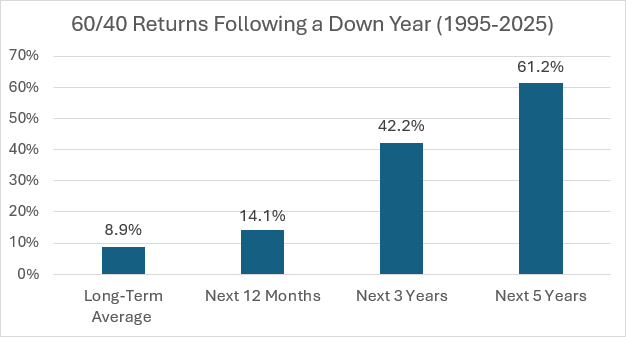
Source: Morningstar Direct. The chart illustrates total returns from 1/1/1995 through 12/31/2025. Stocks were represented by the Russell 3000 and bonds were represented by the Bloomberg Aggregate Bond Index. Long-term average returns were annualized. Subsequent 1/3/5 years returns were cumulative.
The implication is straightforward: a bad year for the 60/40 approach has historically been a poor predictor of future failure. In fact, it's often preceded some of the strategy's best performance.
Why Diversification Still Works
At its core, the logic behind combining stocks and bonds is timeless. Stocks provide long-term growth potential. Bonds offer stability and a cushion during equity downturns. Over full market cycles, blending these asset classes has historically produced better risk-adjusted returns than relying on either alone. This has resulted in meaningful growth without the full volatility of an all-equity portfolio.
Yes, correlations between stocks and bonds can rise temporarily. 2022 demonstrated this clearly. But temporary correlation spikes don't invalidate the principle of diversification any more than a single rainy day invalidates the concept of seasons. Over longer periods, these asset classes still behave differently enough to provide meaningful risk reduction.
This matters enormously for investor behavior. A portfolio that experiences fewer severe drawdowns makes it easier to stay invested during inevitable market turbulence. The ability to stay the course is often the difference between long-term success and failure.
A Framework, Not a Formula
It's worth emphasizing that "60/40" should be viewed as a proxy for a balanced portfolio, rather than a rigid prescription. The appropriate mix between stocks and bonds depends on each investor's time horizon, risk tolerance, and financial goals. A 30-year-old saving for retirement needs a different allocation than a retiree living off their portfolio.
The specific numbers matter less than the underlying principle: combining growth and stability to pursue long-term progress while managing risk. The 60/40 portfolio is simply shorthand for this balanced approach.
The Case for Staying the Course
The 60/40 portfolio is not dead. It remains a durable framework grounded in timeless principles: diversification, discipline, and the recognition that different assets serve different purposes in a portfolio.
There will be more challenging years to come. When they do, commentators will continue to pronounce the strategy obsolete. But for long-term investors willing to look beyond short-term noise, a balanced approach remains one of the most reliable paths toward building wealth.
Week in Review
- The December Job Openings and Labor Turnover Survey (JOLTS), released on February 5th, reported a decline of 386,000 openings from the prior month, bringing total job openings down to 6.5 million. Excluding the pandemic period, this represents the lowest level of job openings since 2017. Despite the softer demand for labor, the layoff rate held steady and remains near historic lows.
- The latest ISM (Institute for Supply Management) service-sector PMI, a key indicator of economic activity in the services industry, remained unchanged in January with a reading of 53.8. This marked the eighth month in a row that the PMI surpassed 50, signaling continued expansion in the services sector, which accounts for more than two-thirds of the US Economy.
- According to FactSet, 59% of the S&P 500 reported Q4 results as of February 6th. The earnings growth rate, blended between companies that have already reported and the estimates for those that have yet to report, now stands at 13.0%, which would mark the fifth-straight quarter of double-digit earnings growth reported by the index. FactSet also notes a meaningful divergence in earnings growth rates based on geographic revenue exposure. Companies generating more than half of their revenue outside the United States are reporting a blended earnings growth rate of 17.7%, compared with 10.0% for companies whose revenue is primarily domestic, aided in part by a weaker U.S. dollar.
Hot Reads
Markets
- Wall Street’s Hunt for Cheaper Stocks Goes Global (WSJ)
- Disappointing Holiday Season: December Retail Sales Were Flat, Falling Well Short of Estimate (CNBC)
- Why Inflation May Be About to Come in Hot (WSJ)
Investing
- Iceberg Crashes (Ben Carlson)
- Did you Beat the Market? (Jason Zweig)
- Perfect Portfolio (Adam Grossman)
Other
- How to Make People Feel Seen – Simon Sinek (YouTube)
- How Private Equity is Reshaping Youth Sports in America – Bloomberg Originals (YouTube)
- I Trained With U.S. Green Berets Prepping for War With Russia – WSJ (YouTube)
Markets at a Glance
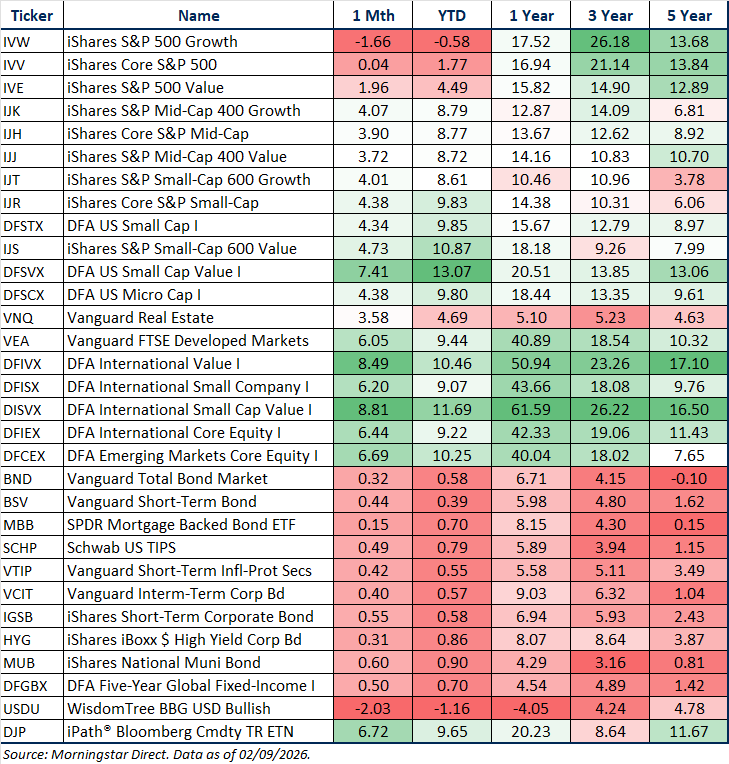
Fund Returns
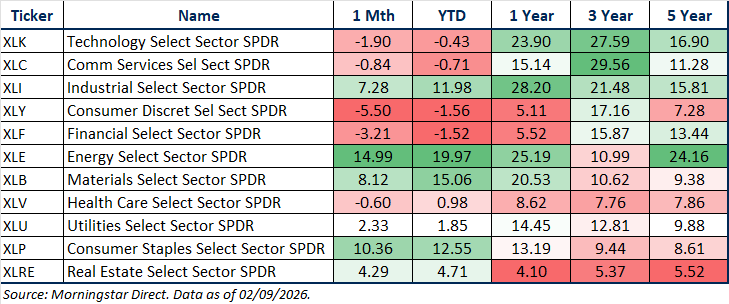
Sector Returns
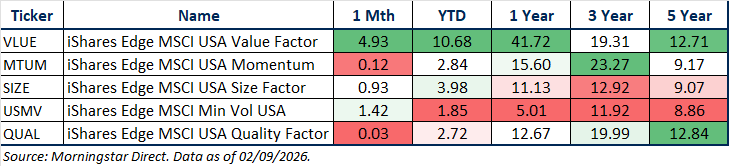
Factor Returns
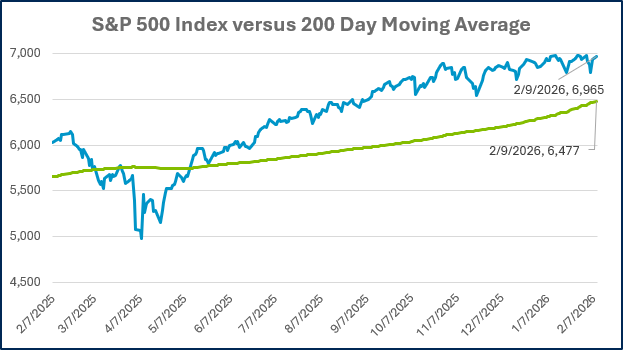
Source: Morningstar Direct.
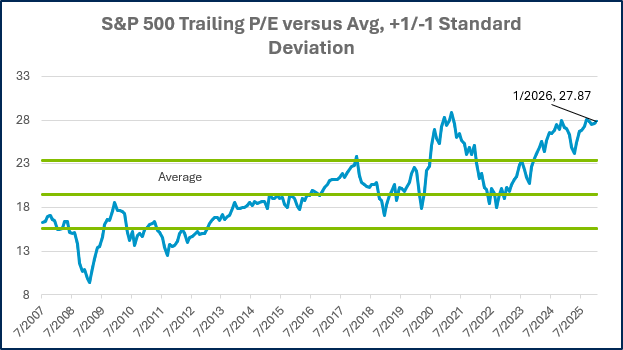
Source: Morningstar Direct.
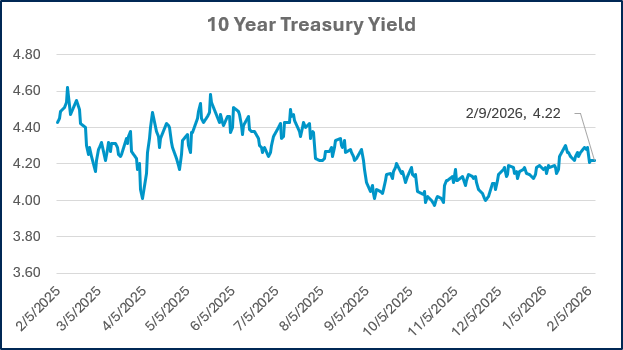
Source: Treasury.gov
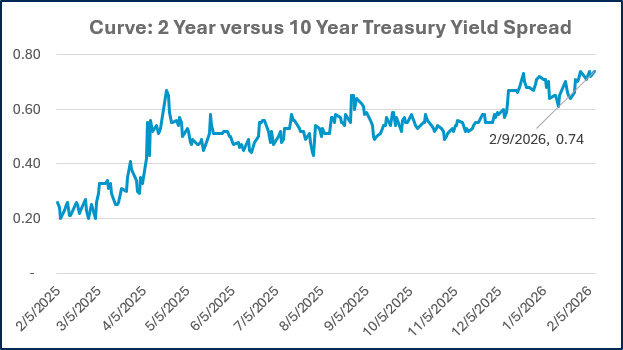
Source: Treasury.gov
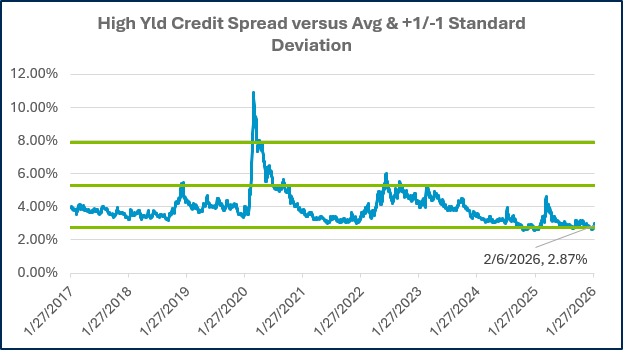
Source: FRED Database & ICE Benchmark Administration Limited (IBA)
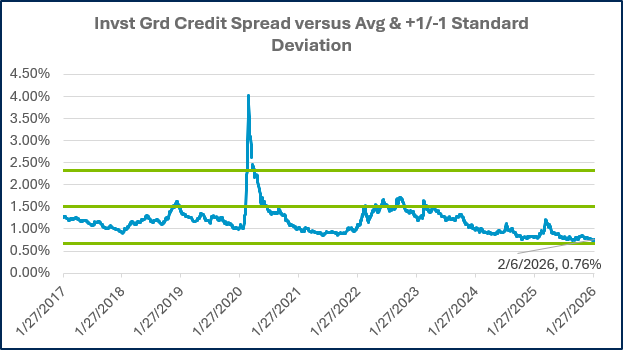
Source: FRED Database & ICE Benchmark Administration Limited (IBA)
Economic Calendar
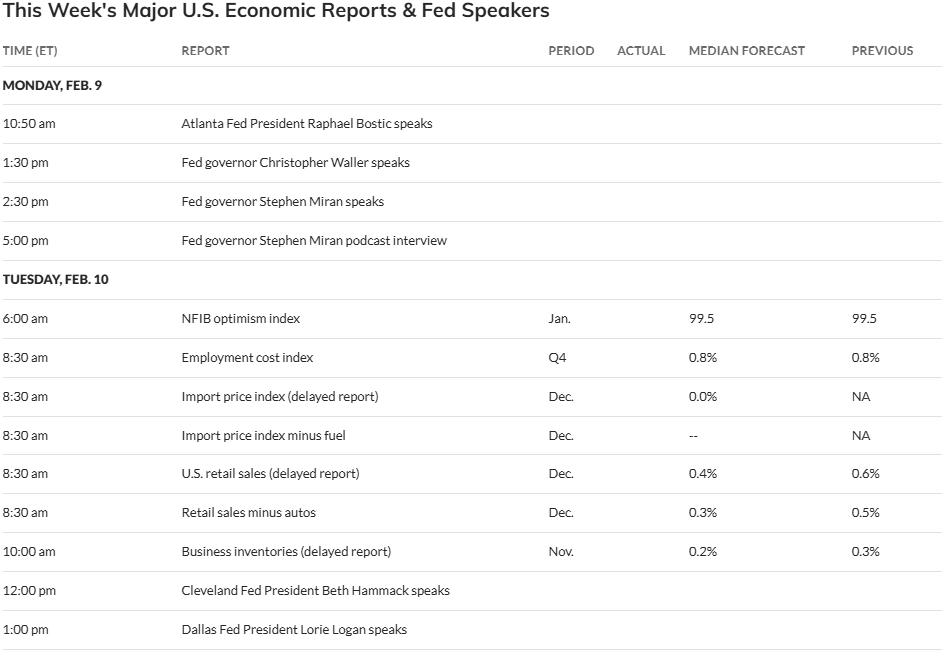
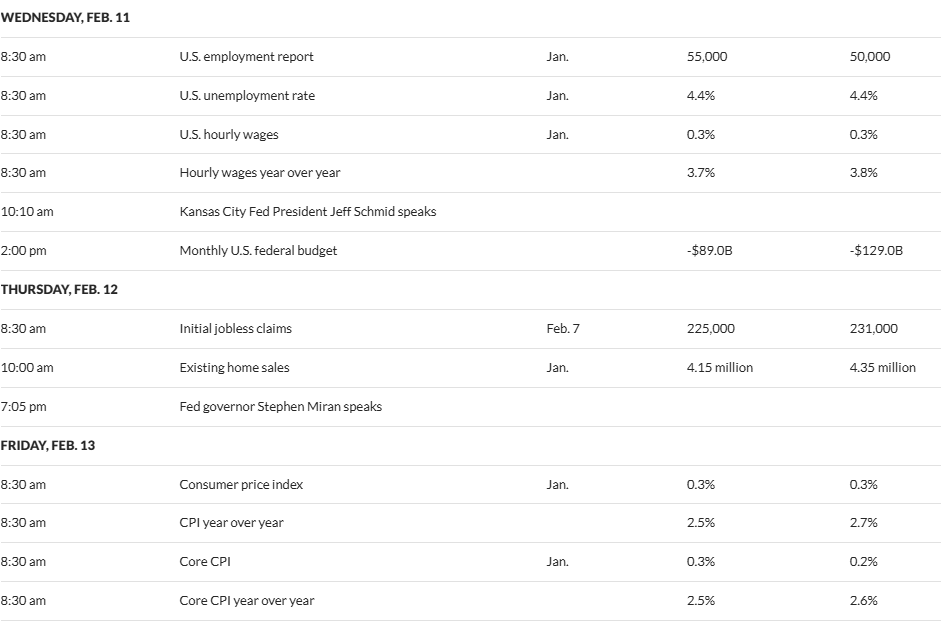
Source: MarketWatch

- Competition, Achiever, Relator, Analytical, Ideation
Josh Jenkins, CFA
Chief Investment Officer, Principal
Josh Jenkins, Chief Investment Officer, began his career in 2010. With a background in investment analysis and portfolio management from his previous roles, he quickly advanced to his current leadership position. As a member of the Lutz Financial Board and Chair of the Investment Committee, he guides Lutz Financial’s investment strategy and helps to manage day-to-day operations.
Leading the investment team, Josh directs research initiatives, while overseeing asset allocation, fund selection, portfolio management, and trading. He authors the weekly Financial Market Update, providing clients with timely insights on market conditions and economic trends. Josh values the analytical nature of his work and the opportunity to collaborate with talented colleagues while continuously expanding his knowledge of the financial markets.
At Lutz, Josh exemplifies the firm’s commitment to maintaining discipline and helping clients navigate market uncertainties with confidence. While staying true to the systematic investment process, he works to keep clients' long-term financial goals at the center of his decision-making.
Josh lives in Omaha, NE. Outside the office, he likes to stay active, travel, and play golf.
Recent News & Insights

Recent News
Lutz Named a Top Consulting Firm in 2026 Omaha B2B Awards
Lutz, a Nebraska-based business solutions firm, has once again been recognized as a top winner ...

Client Advisory Services
How Lutz Works With Your Bookkeeper
Chances are, you’ve heard the term bookkeeper, but do you know what they actually do? While ...

Transaction Advisory
7 Steps to Get Your Business Ready for a Transition
For many business owners, a transition starts long before it becomes a defined plan. Maybe ...

Rural Hospital
Hospital Board of Director Responsibilities
Hospital board members serve as the governing body of the organization, responsible for ...


Let’s get you where you want to go.
We work to simplify complexities, help make critical business decisions, and confidently focus on the things that are truly important to you. We embrace your business as our own to spark the right solutions and help you thrive.