
.png?width=1440&height=622&name=Accounting%20Service%20Menu%20Image%20(1).png)
.png?width=1440&height=622&name=Tech%20Service%20Menu%20Image%20(1).png)
.png?width=1440&height=622&name=Financial%20Serivce%20Menu%20Image%20(1).png)
.png?width=1440&height=622&name=M%26A%20Service%20Menu%20Image%20(1).png)
.png?width=1440&height=622&name=Talent%20Service%20Menu%20Image%20(1).png)
%20(1).jpg?width=264&height=160&name=Website%20Featured%20Content%20Images%20(2)%20(1).jpg)
%20(1).jpg?width=264&height=160&name=Website%20Featured%20Content%20Images%20(4)%20(1).jpg)
-Mar-08-2024-08-50-35-9527-PM.png?width=300&height=175&name=Untitled%20design%20(1)-Mar-08-2024-08-50-35-9527-PM.png)

%20(1)-1.jpg?width=264&height=160&name=Website%20Featured%20Content%20Images%20(2)%20(1)-1.jpg)
-1.jpg?width=264&height=160&name=Website%20Featured%20Content%20Images%20(1)-1.jpg)
%20(1).jpg?width=264&height=160&name=Website%20Featured%20Content%20Images%20(3)%20(1).jpg)


.jpg)

Julianne Kipple and Lauren Duren

Rural healthcare organizations continue to face pressure from workforce shortages, rising costs, and reimbursement challenges. As providers evaluate long-term sustainability, the Rural Health Transformation (RHT) Program may offer a path to fund improvements that otherwise feel out of reach. As states begin rolling out funding opportunities, understanding how and when to participate is becoming increasingly important.
What is RHT?
The Rural Health Transformation Program is a federal initiative administered through the Centers for Medicare & Medicaid Services (CMS). The program provides $50 billion in funding over five years to states to develop and implement long-term strategies aimed at improving healthcare access, sustainability, and outcomes in rural communities. Nebraska alone received $218.5 million in first-year funding, highlighting the scale of investment states may be able to direct toward rural healthcare transformation initiatives.
Unlike short-term grants, RHT is designed to support broader transformation efforts focused on operational stability, workforce development, technology, and care delivery models. Each state develops its own plan based on local needs and priorities.
CMS identified five primary goals for the program:
- Sustainable access to rural healthcare services
- Workforce recruitment and retention
- Innovative care delivery models
- Technology and infrastructure advancement
- Improved health outcomes within rural communities
Why does RHT matter right now?
Nebraska healthcare organizations should be aware that Rural Health Transformation Program (RHT) funding opportunities are already being released through the state and will continue to roll out in phases.
Several application windows have already opened, and others are expected throughout the year, some with limited time to apply. Because timelines vary by initiative and may have relatively short turnaround periods, organizations interested in participating should begin evaluating eligibility, identifying potential projects, and coordinating any required partnerships early.
Being prepared ahead of each release can help organizations take advantage of initial funding opportunities and avoid delays in participation.
What should healthcare leaders review?
Eligibility and funding structures vary by state and initiative. While CMS distributes funding to states, healthcare organizations typically access opportunities through state-led programs, grants, or Requests for Applications (RFAs). Nebraska, for example, plans to release multiple RFAs over the next five years.
Healthcare leaders should evaluate:
- Eligibility under state-specific rural criteria
- Whether initiatives prioritize CAHs, RHCs, FQHCs, or other provider types
- Workforce shortages, behavioral health gaps, or access-to-care challenges
- Technology limitations related to interoperability, cybersecurity, telehealth, or reporting
- Opportunities to participate in value-based care or care coordination
- Required partnerships with providers, community organizations, or public health entities
- Reporting, compliance, and outcome expectations
- Long-term sustainability beyond the funding period
How does the RHT program help?
While CMS distributes RHT funding to participating states, healthcare organizations will typically access opportunities through state-administered initiatives, grant programs, and RFAs. As states finalize transformation plans, many are prioritizing investments that improve long-term sustainability, patient access, and operational stability.
Common investment areas include:
- Expanding telehealth and remote patient monitoring capabilities
- Strengthening behavioral health and community-based care services
- Modernizing EHR systems, data infrastructure, and interoperability
- Enhancing cybersecurity and technology infrastructure
- Improving care coordination across providers and care settings
- Supporting workforce recruitment, retention, and training initiatives
- Developing innovative care delivery or value-based care models
Rather than treating RHT as standalone funding, healthcare organizations are often best served by aligning opportunities with strategic initiatives already underway.
That typically means:
- Identifying organizational priorities and operational gaps
- Evaluating whether current staffing, systems, and workflows can support implementation
- Modeling financial sustainability beyond the funding period
- Building realistic implementation timelines around operational capacity
- Defining measurable outcomes early to support accountability and reporting
This approach can help organizations maximize available funding while supporting initiatives that create lasting operational and community impact.
Navigate Rural Health Transformation with Lutz
At Lutz, our healthcare accounting services help you evaluate strategic opportunities, improve operational visibility, and support long-term sustainability initiatives for your rural hospital. Contact us to learn more.
- Achiever, Learner, Strategic, Context, Individualization
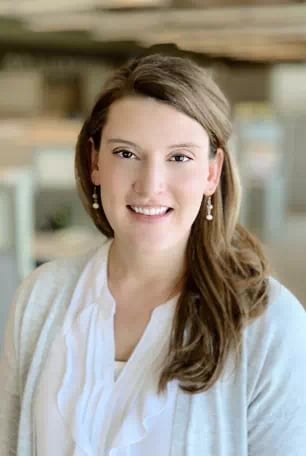
Julianne Kipple
Healthcare Shareholder
Julianne Kipple, Healthcare Shareholder, began her career in 2008. Over the years, she has built a strong expertise in healthcare accounting and consulting while driving the expansion of Lutz’s services for rural and critical access hospitals. She is actively involved in the healthcare department’s operations, focusing on strategic growth and team development.
Leveraging her experience in healthcare finance, Julianne focuses on providing outsourced CFO services to healthcare facilities. She provides Medicare and Medicaid cost reporting, software conversion assistance, and comprehensive financial management solutions. Julianne values ensuring the sustainability of rural healthcare facilities, understanding their vital role in their communities.
At Lutz, Julianne demonstrates what it means to serve beyond expectations by helping healthcare organizations facing complex challenges. Her genuine care for rural healthcare facilities shows in everything she does - from anticipating their needs to finding creative solutions that ensure their success. Through her thoughtful mentorship of her team, she's helped establish Lutz as a trusted partner in the healthcare sector.
Julianne lives in Bennington, NE, with her husband and four children. Outside the office, she can be found attending her kids' sporting events, running, and cooking on the weekends.
- Responsibility, Discipline, Maximizer, Harmony, Achiever
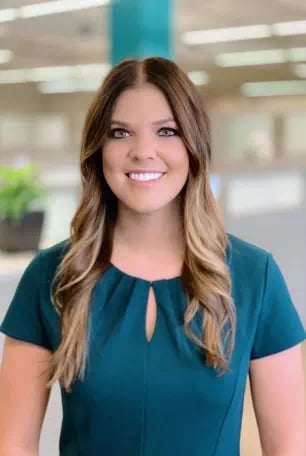
Lauren Duren
Client Advisory Services & Healthcare Director
Lauren Duren, Client Advisory Services & Healthcare Director, began her career in 2012. Since she started as an intern with Lutz, she has developed comprehensive expertise in healthcare accounting and consulting while serving as the private practice department leader and contributing to the CAS policy committee.
Leveraging her experience in outsourced accounting and advisory services, Lauren focuses on independent medical practices. She provides strategic solutions, including provider compensation, revenue cycle optimization, and practice transition planning. Lauren values helping clients think through complex challenges to drive meaningful business improvements and develop strategies for long-term sustainability.
At Lutz, Lauren's discipline and focus enable her to deliver exceptional results in the healthcare sector. Her methodical approach to complex projects, combined with her commitment to quality technical support, has been instrumental in expanding specialized services for medical practices. Passionate about developing the next generation of talent at Lutz, Lauren also dedicates significant time to mentoring and training staff.
Lauren lives in Omaha, NE, with her family. Outside the office, she can be found spending time with friends and family, attending concerts, reading, cooking, and staying active through yoga and cycling.
Recent News & Insights

QuickBooks
QuickBooks Online: Time, Billing, & Sales Forms
For many business owners, the work doesn’t end when the job is complete. Employee hours need ...
Market Commentary
The Market Is Harder to Outsmart Than It Looks
If you are looking for a reason to make a change to your portfolio, today’s market provides ...

Nonprofit
Tailoring QuickBooks Online to Fit Your Nonprofit’s Needs
For nonprofit organizations, every dollar matters. At the same time, accurate financial ...

Family Office
The Great Wealth Transfer: Retaining the Next Generation
Most families with substantial wealth already have the documents. They likely have a will, ...


Let’s get you where you want to go.
We work to simplify complexities, help make critical business decisions, and confidently focus on the things that are truly important to you. We embrace your business as our own to spark the right solutions and help you thrive.