
.png?width=1440&height=622&name=Accounting%20Service%20Menu%20Image%20(1).png)
.png?width=1440&height=622&name=Tech%20Service%20Menu%20Image%20(1).png)
.png?width=1440&height=622&name=Financial%20Serivce%20Menu%20Image%20(1).png)
.png?width=1440&height=622&name=M%26A%20Service%20Menu%20Image%20(1).png)
.png?width=1440&height=622&name=Talent%20Service%20Menu%20Image%20(1).png)
%20(1).jpg?width=264&height=160&name=Website%20Featured%20Content%20Images%20(2)%20(1).jpg)
%20(1).jpg?width=264&height=160&name=Website%20Featured%20Content%20Images%20(4)%20(1).jpg)
-Mar-08-2024-08-50-35-9527-PM.png?width=300&height=175&name=Untitled%20design%20(1)-Mar-08-2024-08-50-35-9527-PM.png)

%20(1)-1.jpg?width=264&height=160&name=Website%20Featured%20Content%20Images%20(2)%20(1)-1.jpg)
-1.jpg?width=264&height=160&name=Website%20Featured%20Content%20Images%20(1)-1.jpg)
%20(1).jpg?width=264&height=160&name=Website%20Featured%20Content%20Images%20(3)%20(1).jpg)


.jpg)


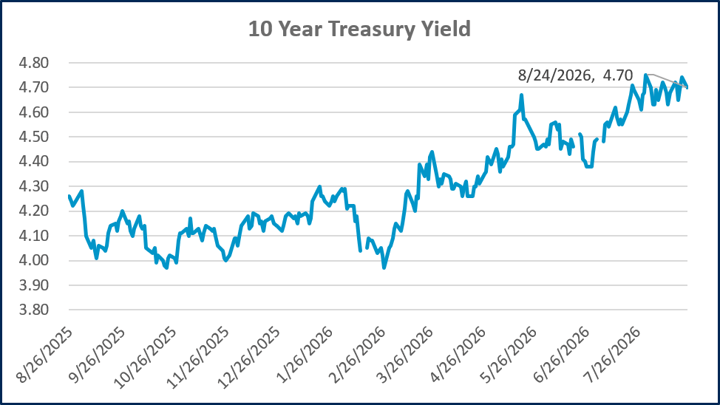
The bond market rarely leads the financial news, but lately it has been getting plenty of attention. The yield on the 30-year Treasury recently climbed above 5.3%, its highest level since 2007, while the benchmark 10-year yield has pushed toward 4.7%. These moves matter because Treasury yields influence borrowing costs throughout the economy and play an important role in how investors value stocks and other assets.
Understanding why yields are rising is worthwhile. Deciding what investors should do about it may be simpler than the headlines suggest.
The Fed Doesn't Set Every Interest Rate
When rates move, the Federal Reserve usually gets the credit or the blame. That instinct is only partly correct. The Fed exerts strong control over short-term rates, and its policy rate has been parked at 3.50%-3.75% for months. Long-term rates are set by something messier: the collective judgment of investors worldwide deciding what compensation they require to lend money for an extended period.
Those investors are currently weighing three forces.
The first is inflation. The conflict with Iran drove energy prices sharply higher earlier this year, and bond investors demand extra yield when they worry inflation will erode the value of their fixed payments.
The second is an extraordinary demand for capital. Technology companies are borrowing enormous sums to build AI infrastructure, with AI-related corporate debt issuance reaching roughly $220 billion this year. When more borrowers compete for the same pool of savings, the price of borrowing rises.
The third is Washington. Persistent deficits mean a steadily growing supply of Treasury bonds for the market to absorb. The Congressional Budget Office projects this year's deficit at 5.8% of GDP, well above the 50-year average of 3.8%. More supply, all else equal, means higher yields.
Higher Rates Are a Real Headwind
None of this should be waved away. Higher borrowing costs make some business projects uneconomical, which can slow growth. When safe assets pay more, riskier assets must offer more to compete, and that pressure falls hardest on investments whose value depends on profits expected far in the future.
A headwind, however, is not the same thing as a crisis. The difference between the two is where investors should focus.
High Compared to What?
The last time the 30-year Treasury yielded this much, the first iPhone had just gone on sale. That comparison is meant to feel like a long time ago, because it was. It also reveals something about why today's yields feel so alarming: most investors' sense of "normal" was formed in the fifteen years after the Financial Crisis, when rates remained at unusual lows. Measured against that era, 5% looks extreme. Measured against the longer sweep of market history, it is closer to ordinary.
Historical 30-Year Treasury Bond Yield
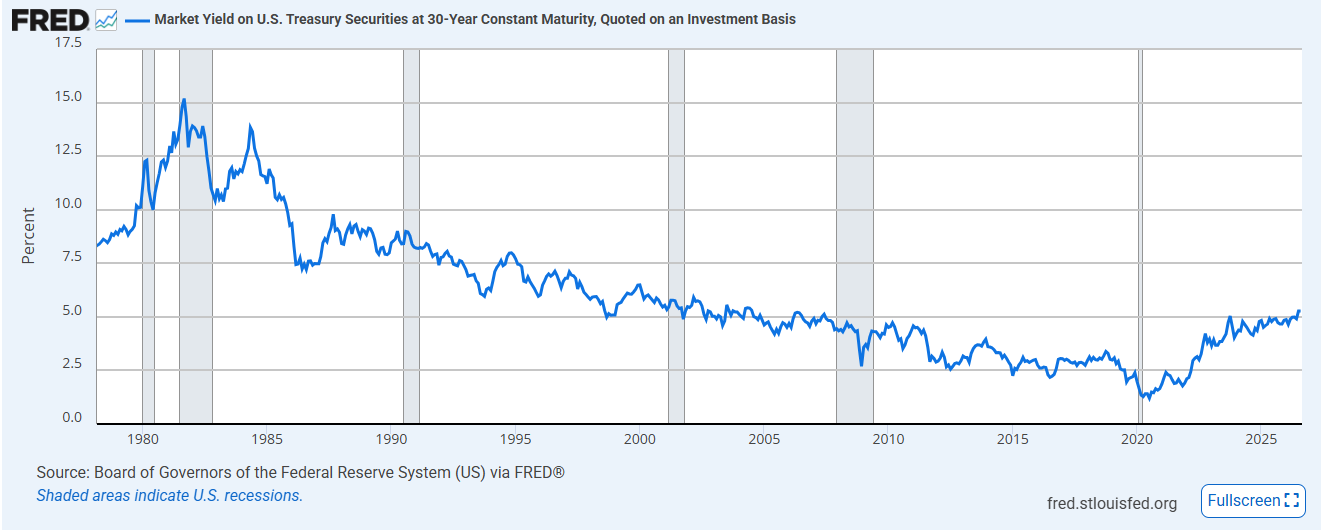
Source: Federal Reserve Bank of St. Louis (FRED). Data from 3/1/1977 to 8/24/2026
There is surely some level of interest rates that would meaningfully damage the economy and markets. Nobody can identify that threshold with precision, and nothing about today's yields demonstrates we have crossed it. The honest description of current rates is that they are high enough to matter, but nowhere near unprecedented.
The News Is Not All Moving One Direction
The inflation picture, which helped start this move, has quietly improved. Consumer prices rose just 0.1% in July. Annual inflation eased to 3.4%, while core inflation fell to 2.5%. Energy prices remain well above year-ago levels and the conflict driving them has not ended, so declaring victory would be premature. Still, the recent readings are encouraging and remove at least one source of pressure on long-term rates, even if they do not eliminate the others.
Real Problems Don't Always Require Portfolio Solutions
The federal debt deserves genuine concern. CBO projects that debt held by the public will rise from 101% of GDP today to 120% by 2036, with interest costs consuming an ever-larger share of the budget. That is a real long-term policy problem.
A real problem, however, is not the same thing as an actionable one. Markets have known about the deficit for decades. Treasury prices already reflect investors' collective expectations about future borrowing, inflation, and growth. For a portfolio change based on deficit concerns to add value, an investor would need to know not merely that the debt is large, but that its consequences will arrive sooner, hit harder, or unfold differently than millions of other investors currently expect. That is a far higher bar than many people realize.
A similar distinction applies to the AI borrowing boom. Borrowing to cover financial distress sends a very different economic signal than borrowing to fund new investment. Much of today's AI-related borrowing falls into the latter category. While this does not guarantee the spending will pay off, higher rates can impose some useful discipline on that spending. A rising cost of capital makes marginal projects harder to fund and forces borrowers to be more selective. If the investment ultimately raises productivity, the economy's capacity to support somewhat higher rates rises along with it.
Higher Yields Create Winners Too
Rising rates are routinely described as a threat. They are also a raise. Bond investors are being offered their best prospective returns in nearly two decades. Savers are finally paid something meaningful for holding safe assets. Investors deciding where to put new money have genuine choices again, a condition that was largely absent for the decade after the Financial Crisis.
The Takeaway
Interest rates will keep moving. The explanations for those moves will keep changing. Investors who feel compelled to respond to each shift tend to trade away returns in exchange for a feeling of control. A diversified portfolio does not require knowing where yields go next. It is built around the reality that nobody does.
Week in Review
-
Long-term Treasury yields moved sharply higher, with the 30-year yield recently reaching 5.34%, its highest level since 2007, amid inflation, fiscal, and geopolitical concerns. Mortgage rates, which tend to track the 10-year Treasury more closely, have also risen, with the average 30-year fixed rate at 6.65%, up about 67 basis points since late February.
-
The Jackson Hole Economic Symposium begins Thursday, with investors focused on Fed Chair Kevin Warsh’s keynote Friday for clues on the outlook for monetary policy. Warsh has generally avoided detailed forward guidance, leaving markets looking for greater clarity on how the Fed views persistent inflation and the recent rise in bond yields.
-
S&P 500 earnings have been exceptionally strong. With 88% of companies reporting Q2 results as of August 7, FactSet estimated blended year-over-year earnings growth of 50.4%, the highest since Q2 2021. Unusually large gains at Alphabet and Amazon boosted the figure, but earnings growth would still be 32.0% excluding those two companies.
Hot Reads
Markets
- Fed Minutes Reveal Broader Support for Rate Increases (Nick Timiraos)
- The Three Minds Leading the Fed's Inflation Rethink (WSJ)
- U.S. Debt Just Topped $40 Trillion: How We Got Here (WSJ)
Investing
- Buyer Beware: Private Funds Come With Big Tax Bills (Jason Zweig)
- How Often Should You Check Your Portfolio (Ben Carlson)
- These "Innovative" ETFs Have Been Disastrous for Investors (Morningstar)
Other
- Top #DDD Videos in Omaha, Nebraska with Guy Fieri - Food Network (YouTube)
- 6 Chipping Strategies Pros Use to Get Up and Down - Golf Digest (YouTube)
- Nebraska Football 2026 Record Predictions with Will Compton (YouTube)
Markets at a Glance
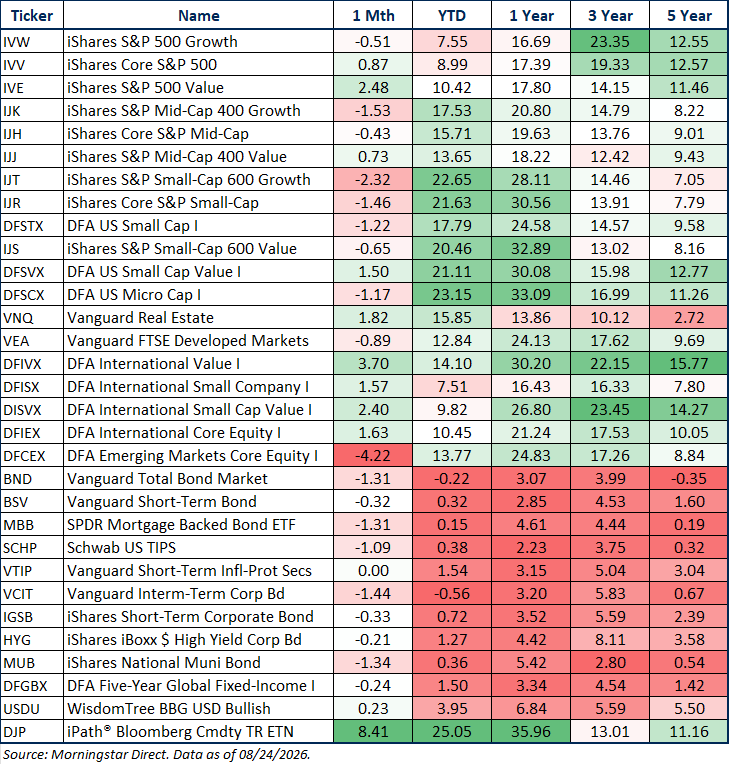
Fund Returns
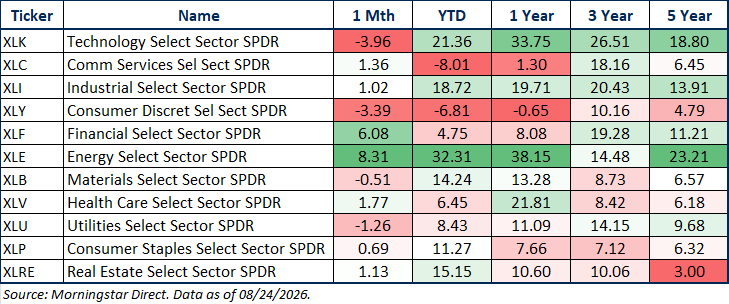
Sector Returns
Factor Returns
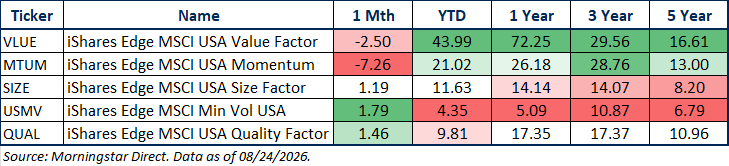
Source: Morningstar Direct.
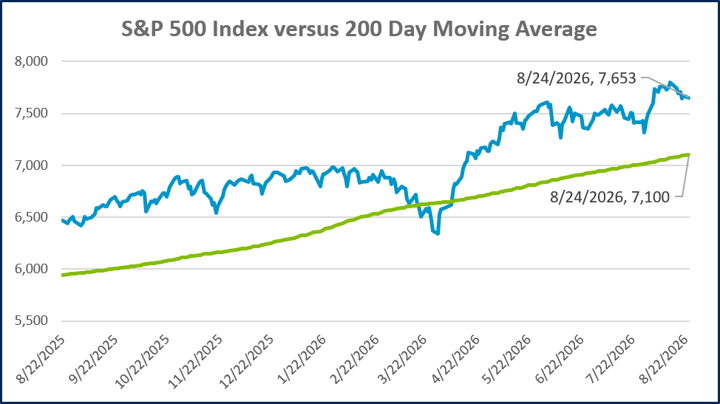
Source: Morningstar Direct.
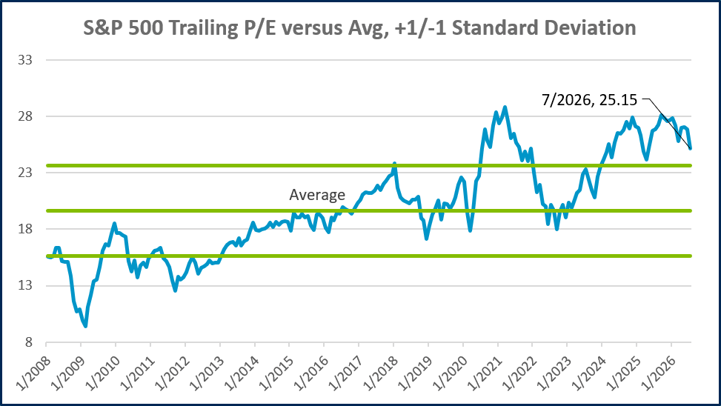
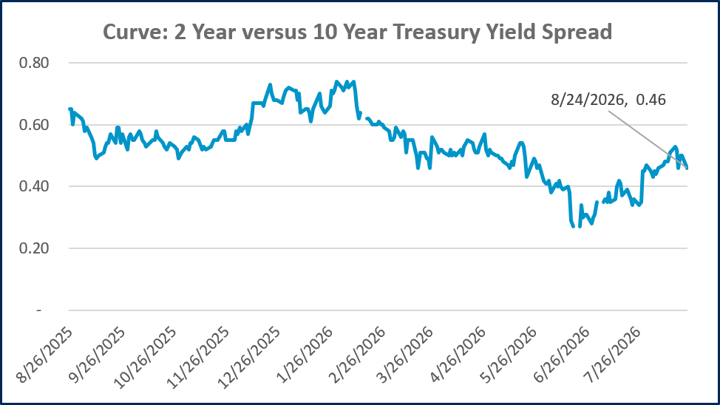
Source: Treasury.gov
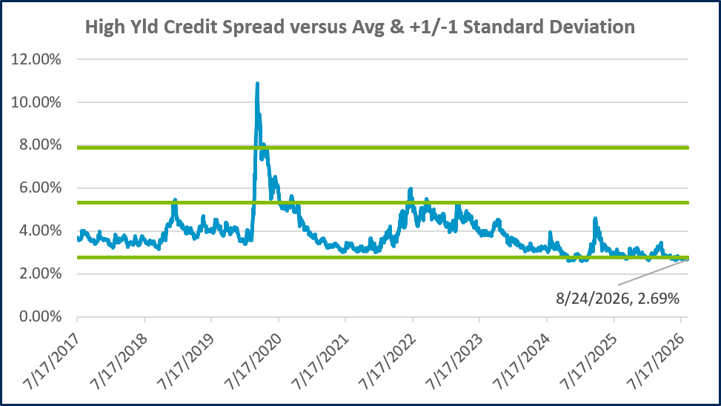
Source: Treasury.gov
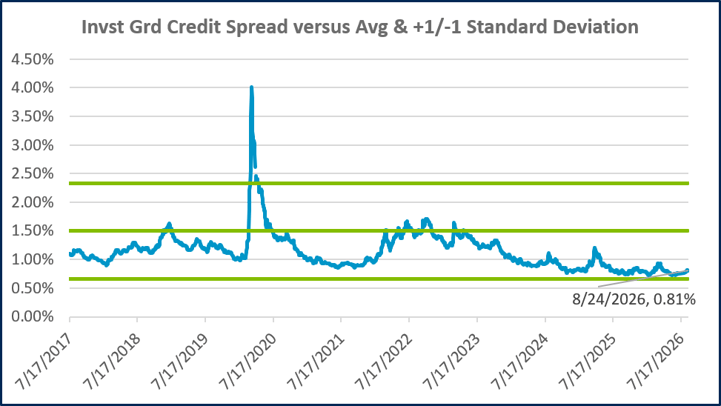
Source: FRED Database & ICE Benchmark Administration Limited (IBA)
Source: FRED Database & ICE Benchmark Administration Limited (IBA)
Economic Calendar
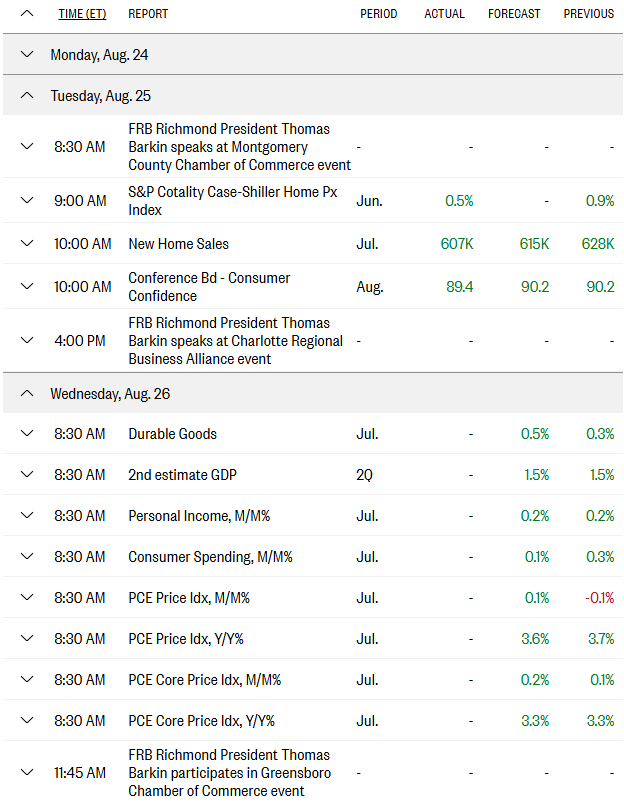
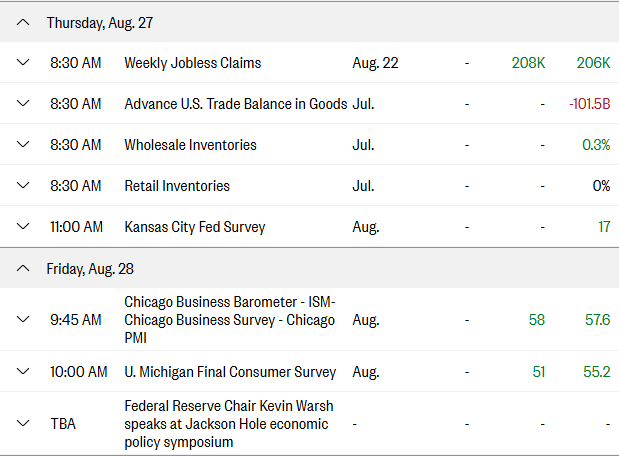
Source: MarketWatch

- Competition, Achiever, Relator, Analytical, Ideation
Josh Jenkins, CFA
Chief Investment Officer, Principal
Josh Jenkins, Chief Investment Officer, began his career in 2010. With a background in investment analysis and portfolio management from his previous roles, he quickly advanced to his current leadership position. As a member of the Lutz Financial Board and Chair of the Investment Committee, he guides Lutz Financial’s investment strategy and helps to manage day-to-day operations.
Leading the investment team, Josh directs research initiatives, while overseeing asset allocation, fund selection, portfolio management, and trading. He authors the weekly Financial Market Update, providing clients with timely insights on market conditions and economic trends. Josh values the analytical nature of his work and the opportunity to collaborate with talented colleagues while continuously expanding his knowledge of the financial markets.
At Lutz, Josh exemplifies the firm’s commitment to maintaining discipline and helping clients navigate market uncertainties with confidence. While staying true to the systematic investment process, he works to keep clients' long-term financial goals at the center of his decision-making.
Josh lives in Omaha, NE. Outside the office, he likes to stay active, travel, and play golf.
Recent News & Insights

Ag
Nebraska Tax Incentives for Ag Businesses
Nebraska offers tax incentives to various business types, including ag companies. This guide ...

Cybersecurity
Steps to Build a Strong IT Security Culture
Every organization relies on technology to operate, communicate, and serve customers. But even ...

QuickBooks
QuickBooks Online: Time, Billing, & Sales Forms
For many business owners, the work doesn’t end when the job is complete. Employee hours need ...

Market Commentary
The Market Is Harder to Outsmart Than It Looks
If you are looking for a reason to make a change to your portfolio, today’s market provides ...


Let’s get you where you want to go.
We work to simplify complexities, help make critical business decisions, and confidently focus on the things that are truly important to you. We embrace your business as our own to spark the right solutions and help you thrive.