
.png?width=1440&height=622&name=Accounting%20Service%20Menu%20Image%20(1).png)
.png?width=1440&height=622&name=Tech%20Service%20Menu%20Image%20(1).png)
.png?width=1440&height=622&name=Financial%20Serivce%20Menu%20Image%20(1).png)
.png?width=1440&height=622&name=M%26A%20Service%20Menu%20Image%20(1).png)
.png?width=1440&height=622&name=Talent%20Service%20Menu%20Image%20(1).png)
%20(1).jpg?width=264&height=160&name=Website%20Featured%20Content%20Images%20(2)%20(1).jpg)
%20(1).jpg?width=264&height=160&name=Website%20Featured%20Content%20Images%20(4)%20(1).jpg)
-Mar-08-2024-08-50-35-9527-PM.png?width=300&height=175&name=Untitled%20design%20(1)-Mar-08-2024-08-50-35-9527-PM.png)

%20(1)-1.jpg?width=264&height=160&name=Website%20Featured%20Content%20Images%20(2)%20(1)-1.jpg)
-1.jpg?width=264&height=160&name=Website%20Featured%20Content%20Images%20(1)-1.jpg)
%20(1).jpg?width=264&height=160&name=Website%20Featured%20Content%20Images%20(3)%20(1).jpg)


.jpg)

Joe Donovan and Clarke Beller
-Jun-11-2026-01-54-31-7545-PM.jpg)
Over the last several years, tariffs imposed under the International Emergency Economic Powers Act (IEEPA) have increased costs for many U.S. businesses that import goods from overseas. As legal challenges to those tariffs continue to unfold, some importers may have opportunities to recover previously paid duties.
Whether your business imported products directly or paid tariffs through a broader supply chain, understanding your eligibility and acting within applicable deadlines can be critical. The information below provides an overview of the current landscape and key considerations for businesses evaluating potential refund opportunities.
UPDATED JUNE 10, 2026
Why Importers Should Act Now
Recent court activity has created opportunities for some importers to recover tariffs paid under the IEEPA. U.S. Customs and Border Protection (CBP) has opened a process for certain refund claims, allowing eligible businesses to seek recovery of previously paid duties.
At the same time, the current administration is appealing aspects of the ruling, including whether refunds must be issued for entries that have already become finally liquidated. As a result, eligibility and timing may vary depending on the status of each entry, and future developments could further narrow available options.
Because of this, businesses should evaluate potential claims as soon as possible. In some cases, waiting could limit available filing options and reduce the ability to recover funds.
Who may be eligible for a refund?
Not all tariffs are eligible for refund claims. Generally, only tariffs paid under the IEEPA framework may qualify, and the claimant must be the Importer of Record (IOR).
Eligibility may also depend on the status of each import entry. Unliquidated, recently liquidated, and finally liquidated entries each present different filing requirements and potential refund opportunities.
For many importers, liquidation status is the most time-sensitive consideration. Once an entry liquidates, there is generally a limited window to file a claim or protest. If that window closes, the entry becomes finally liquidated, which may significantly limit available refund options.
Businesses should consider taking the following steps:
- Identify entries where IEEPA duties were paid
- Determine the liquidation status of each entry
- Evaluate eligibility and filing options based on timing
How does the refund process work?
Many businesses rely on freight forwarders, customs brokers, or other trade partners to assist with customs-related filings. However, not all importers have access to these resources or a clear view of their eligibility. Additional support may be needed to analyze entry status, evaluate claims, and navigate filing requirements.
Why should your CPA be involved?
Even after a claim has been filed and processed, it is important to involve your CPA in the discussion. Tariff refunds can have tax implications depending on how the original duties were treated for tax purposes.
Whether the tariffs increased the cost of goods sold, were capitalized into the basis of an asset, or were recorded as an expense, receiving a refund may affect future tax reporting and liability. Understanding these implications early can help avoid surprises and ensure the refund is handled appropriately.
Next Steps
Businesses that paid IEEPA tariffs should evaluate their situation sooner rather than later. With ongoing litigation, evolving guidance, and filing deadlines that may affect eligibility, delaying action could reduce available options.
Lutz is partnering with McGuire Sponsel to help importers review tariff payments, assess entry status, evaluate refund opportunities, and develop claim strategies based on their specific circumstances. Please contact us with questions or for help determining next steps.
Register for our webinar "IEEPA Tariff Refund Opportunities: What Businesses Need to Know" on June 22nd to understand what companies should be doing now, common challenges to be aware of, and why timing is important.
Webinar Recording

- Achiever, Individualization, Strategic, Focus, Learner
Joe Donovan
Tax Shareholder
Joe Donovan, Tax Shareholder, began his career in 2012. Over the past decade, he has built comprehensive expertise in taxation while taking on significant leadership roles. Joe serves on both the board of directors and the Lutz Financial board and contributes to the firm's strategic direction through the tax policy committee.
Leveraging his knowledge in business and income tax planning, Joe focuses on serving clients in the private equity, construction, real estate, and family office sectors. As a Chartered Advisor in Philanthropy, he provides comprehensive tax and estate planning solutions that align with clients' broader financial goals. Joe thrives on partnering with his clients to boost their business profitability, aiming to be their most trusted advisor not just for tax planning but for general business decisions as well.
At Lutz, Joe exemplifies the firm's commitment to being an expert through his strategic approach to complex tax matters. His dedication to continuous learning and ability to understand each client's unique situation enables him to develop tailored solutions that drive success. As a leader in the firm, he actively contributes to fostering growth and developing the next generation of tax professionals.
Joe lives in Omaha, NE, with his wife Franci and their children Jack, Katie, and Danny. Outside the office, he can be found spending time with family, traveling, and reading.
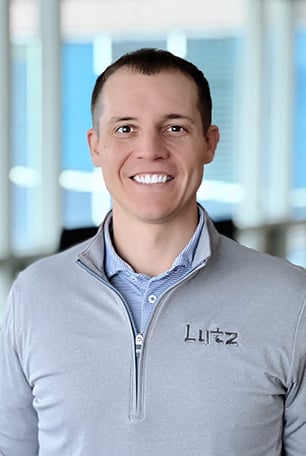
- Analytical, Significance, Individualization, Responsibility, Context
Clarke Beller
Audit Shareholder
Clarke Beller, Audit Shareholder, began his career in 2010. With a background in financial analysis, he has developed a strong foundation in financial reporting and business operations. Clarke serves as the construction niche lead, demonstrating his expertise and leadership in this sector.
Specializing in audit and consulting services for privately held companies, Clarke focuses primarily on the construction industry. He oversees audits, reviews, and compilations while offering business consulting on a monthly, quarterly, and annual basis. Clarke values Lutz's customer-first approach, which allows him to apply his analytical skills and industry knowledge to help clients succeed.
At Lutz, Clarke embodies the firm's "say it straight" philosophy, offering honest and candid insights to clients. His ability to dissect complex financial data and present clear, actionable recommendations ensures clients receive transparent, reliable guidance.
Clarke lives in Omaha, NE, with his wife Kayla and their two sons, Brock and Brant. Outside the office, he spends time golfing, boating, and following football.
Recent News & Insights

Ag
Nebraska Tax Incentives for Ag Businesses
Nebraska offers tax incentives to various business types, including ag companies. This guide ...

Cybersecurity
Steps to Build a Strong IT Security Culture
Every organization relies on technology to operate, communicate, and serve customers. But even ...

QuickBooks
QuickBooks Online: Time, Billing, & Sales Forms
For many business owners, the work doesn’t end when the job is complete. Employee hours need ...

Market Commentary
The Market Is Harder to Outsmart Than It Looks
If you are looking for a reason to make a change to your portfolio, today’s market provides ...


Let’s get you where you want to go.
We work to simplify complexities, help make critical business decisions, and confidently focus on the things that are truly important to you. We embrace your business as our own to spark the right solutions and help you thrive.