
.png?width=1440&height=622&name=Accounting%20Service%20Menu%20Image%20(1).png)
.png?width=1440&height=622&name=Tech%20Service%20Menu%20Image%20(1).png)
.png?width=1440&height=622&name=Financial%20Serivce%20Menu%20Image%20(1).png)
.png?width=1440&height=622&name=M%26A%20Service%20Menu%20Image%20(1).png)
.png?width=1440&height=622&name=Talent%20Service%20Menu%20Image%20(1).png)
%20(1).jpg?width=264&height=160&name=Website%20Featured%20Content%20Images%20(2)%20(1).jpg)
%20(1).jpg?width=264&height=160&name=Website%20Featured%20Content%20Images%20(4)%20(1).jpg)
-Mar-08-2024-08-50-35-9527-PM.png?width=300&height=175&name=Untitled%20design%20(1)-Mar-08-2024-08-50-35-9527-PM.png)

%20(1)-1.jpg?width=264&height=160&name=Website%20Featured%20Content%20Images%20(2)%20(1)-1.jpg)
-1.jpg?width=264&height=160&name=Website%20Featured%20Content%20Images%20(1)-1.jpg)
%20(1).jpg?width=264&height=160&name=Website%20Featured%20Content%20Images%20(3)%20(1).jpg)


.jpg)


%20(1)-2.png)
Geopolitical conflicts tend to dominate headlines and create uncertainty for investors. The recent war with Iran is no exception. Events like these also extend far beyond financial markets. They carry real human consequences, and many individuals, including members of our military, are putting themselves at risk in service to their country.
For investors, moments like this naturally raise questions. Will markets fall? Should portfolios change? Is this different from past geopolitical shocks?
While every conflict is unique, the market’s reaction to geopolitical events has historically followed a fairly consistent pattern: short-term volatility followed by a return to focusing on economic fundamentals.
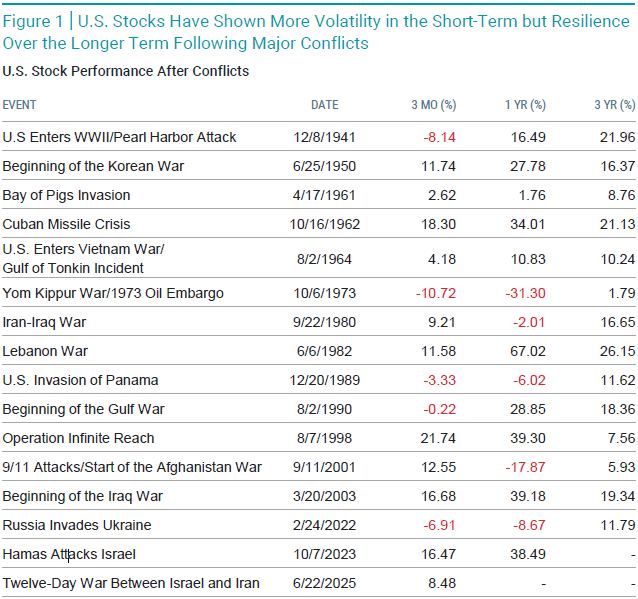
The chart below provides some historical context. It shows U.S. stock market performance following some of the most significant geopolitical events over the past century.
Source: Avantis Investors. Data from July 1926 – December 2025. Source Ken French Data Library. Returns greater than one year are annualized. Past Performance is no Guarantee of future results
The short-term results are clearly mixed. In the three months following these events, markets sometimes fell and sometimes rose. For example, stocks declined after Pearl Harbor and during the 1973 oil embargo, while they rose meaningfully following events like the Cuban Missile Crisis and the beginning of the Iraq War.
This variability reflects how markets process uncertainty. When major geopolitical events occur, investors must quickly assess the potential economic impact. A wider range of possible outcomes can lead to larger short-term swings in prices.
Looking at one-year and three-year returns following these events, the pattern becomes much more consistent. Markets have generally delivered positive results over longer horizons. Even after significant geopolitical shocks, markets have historically recovered and continued to grow over time.
This highlights an important point. While geopolitical events can influence markets in the short term, long-term returns are ultimately driven by economic growth, corporate earnings, and innovation.
The chart below reinforces this point from an even broader perspective. It shows the growth of $1 invested in U.S. stocks since 1926, with many of the same geopolitical events marked along the timeline. Wars, terrorist attacks, oil shocks, and global conflicts are all visible along the path. Despite these disruptions, the long-term trajectory of the market has remained steadily upward.
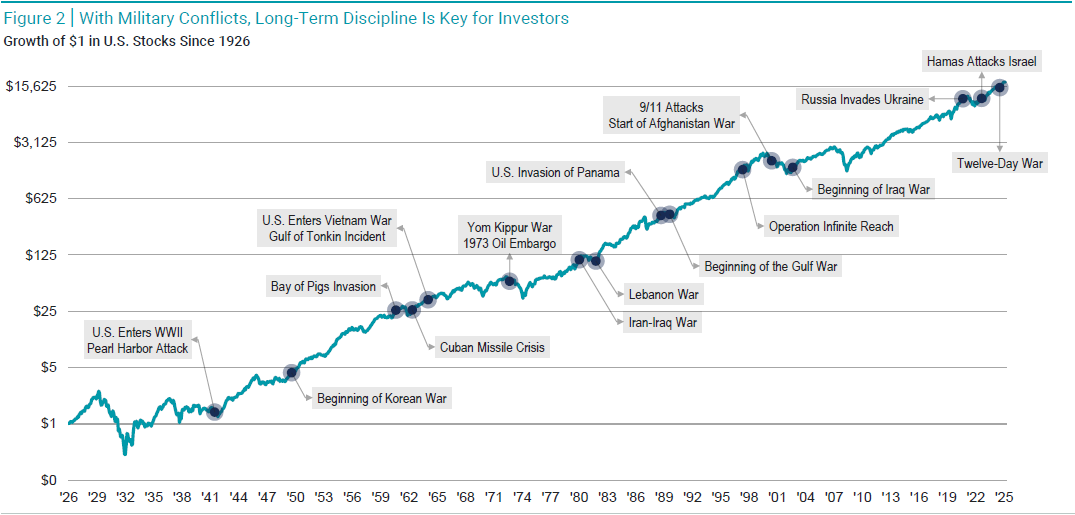
Source: Avantis Investors. Data from Ken French Data Library from July 1926 – December 2025. Past performance is no guarantee of future results.
This does not mean geopolitical risks are irrelevant. Conflicts can influence commodity prices, inflation, and government policy, all of which can affect markets. Still, history suggests that these events rarely derail the long-term growth of the global economy.
For investors, the bigger risk during periods like this is often behavioral. Geopolitical crises can create a strong temptation to adjust portfolios based on headlines. Events like these are extraordinarily difficult to predict. We rarely know how conflicts will evolve, how long they will last, or how governments and markets will ultimately respond.
Trying to reposition investments around events with so many unknowns is one of the most difficult forms of market timing. By the time the outcome becomes clear, markets have often already moved.
Diversified portfolios are built with uncertainty in mind. Global markets continuously incorporate new information and price risk accordingly. Maintaining a disciplined allocation across asset classes, sectors, and regions is designed to help investors navigate exactly these kinds of environments.
The lesson from history is not that geopolitical risks do not matter. It is that markets have consistently demonstrated resilience in the face of uncertainty.
Periods of geopolitical tension can be uncomfortable for investors. Headlines can make risks feel immediate and overwhelming. Yet decades of market history tell a consistent story. Despite wars, crises, and uncertainty, markets have continued to reward long-term investors who remain disciplined and stay invested.
Week in Review
- The Labor Department released the February 2026 nonfarm payroll report on March 6th, showing the U.S. economy lost 92,000 jobs during the month, well below economists’ expectations for a gain of roughly 50,000 jobs. While the report may reflect weakening in the labor market, it was likely weighted down by large strikes in the healthcare industry and a severe winter storm that enveloped a large swath of the country.
- Oil prices experienced significant volatility over the past week, with WTI crude oil briefly surging near $119 per barrel before falling sharply back toward the low-$90 range, reflecting one of the largest intraday swings in years as markets reacted to shifting geopolitical developments in the Middle East.
- With Q4 earnings complete and all of the S&P 500 companies having reported results, FactSet released the final Q4 2025 earnings growth rate of 14%. Information Technology, Industrials, and Communication Services were the sectors that contributed the most to Q4 Earnings, with year-over-year growth rates of 33.4%, 26.5%, and 12.8%, respectively. FactSet also released its initial estimate for Q1 2026 year-over-year earnings growth for the S&P 500 at 11.5%, which would mark the sixth consecutive quarter of double-digit earnings growth for the index.
Hot Reads
Markets
- Jobs Report, Oil Surge Leave Fed Gritting Its Teeth (WSJ)
- U.S. Payrolls Unexpectedly Fell by 92,000 in February; Unemployment Rate Rises to 4.4% (CNBC)
- Is Inflation Cooling or Stubbornly High? Both Can Be True (WSJ)
Investing
- Why is Private Equity Crashing? (Ben Carlson)
- Diversification: It’s Not Just for Defense Anymore (Jason Zweig)
- Managing Investment Risk (HumbleDollar)
Other
- Leadership Has to Be Learned - Simon Sinek (YouTube)
- You Need to Be Bored. Here’s Why – HBR (YouTube)
- Why Data Centers Are Creating a Blue Collar Gold Rush – Bloomberg TV (YouTube)
Markets at a Glance
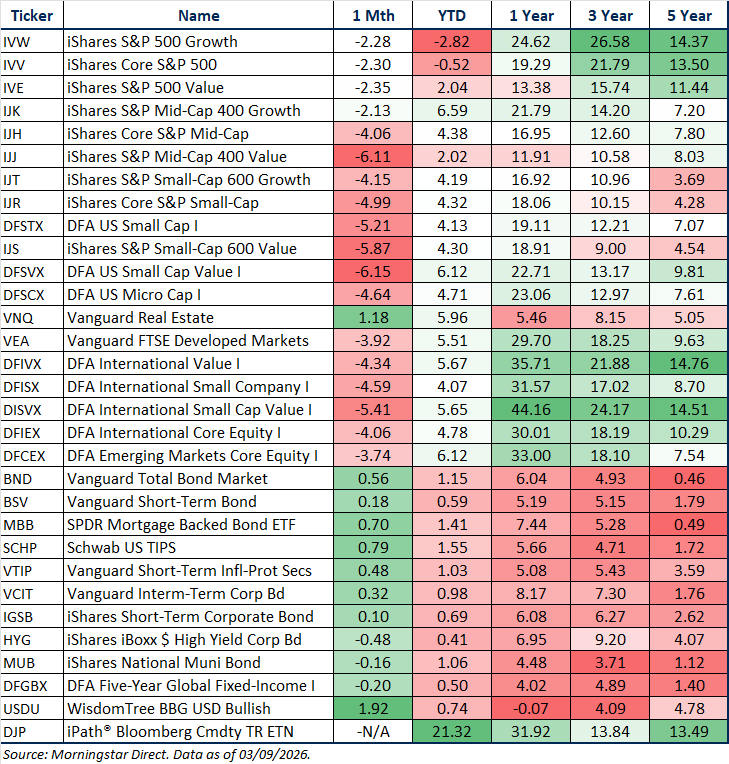
Fund Returns
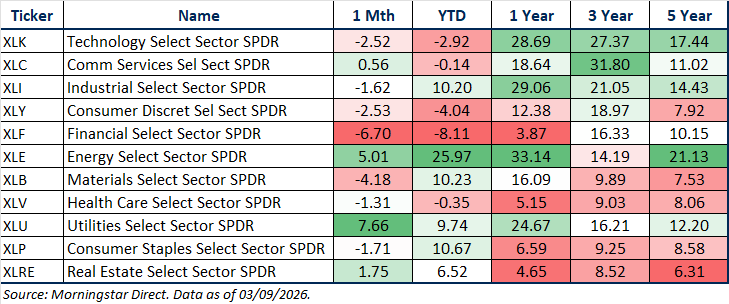
Sector Returns
Factor Returns
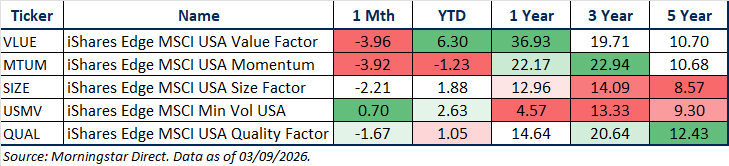
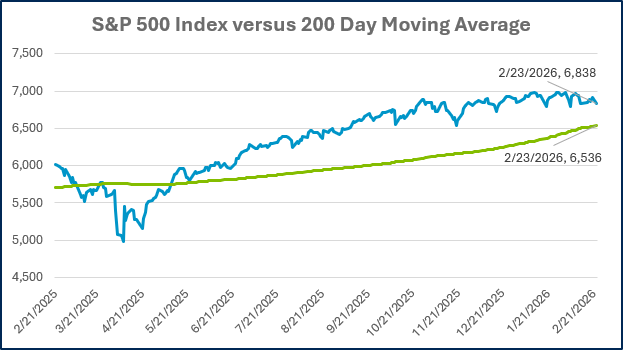
Source: Morningstar Direct.
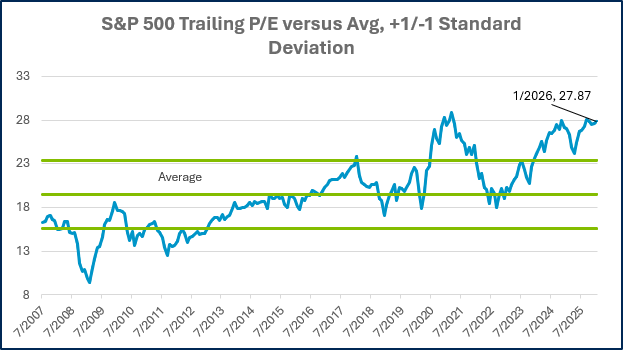
Source: Morningstar Direct.
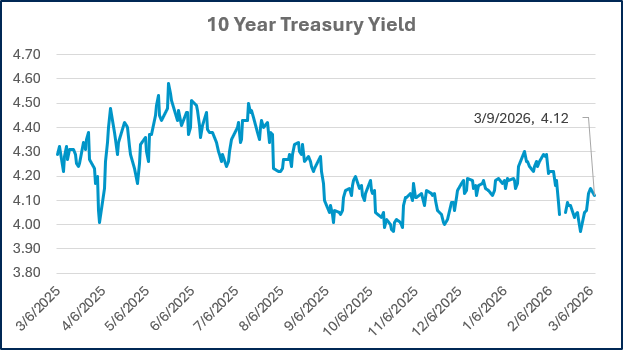
Source: Treasury.gov
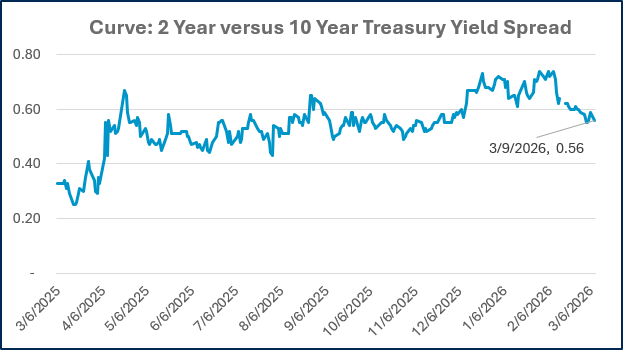
Source: Treasury.gov
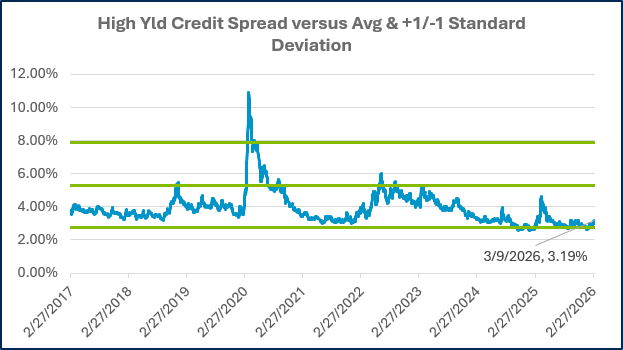
Source: FRED Database & ICE Benchmark Administration Limited (IBA)
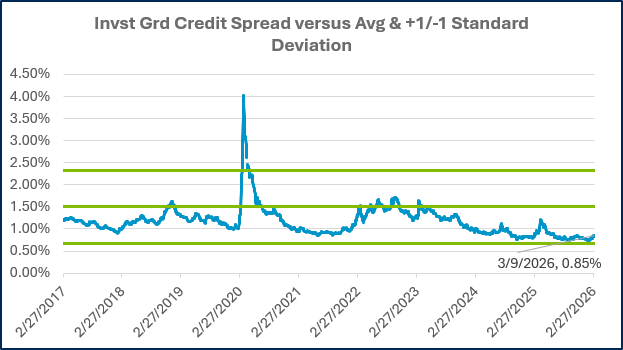
Source: FRED Database & ICE Benchmark Administration Limited (IBA)
Economic Calendar
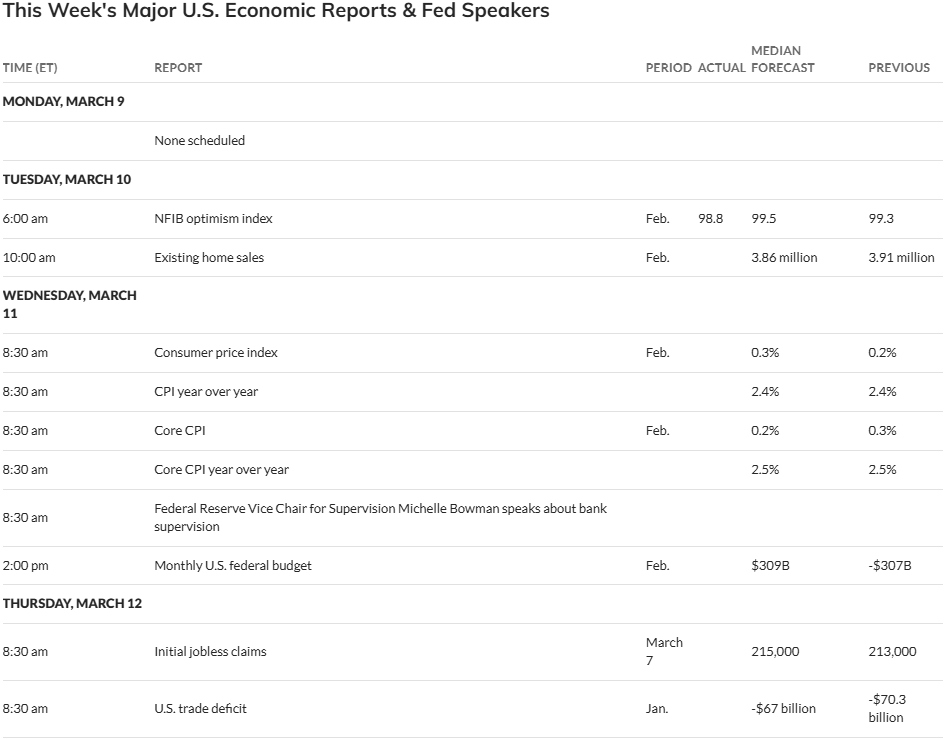
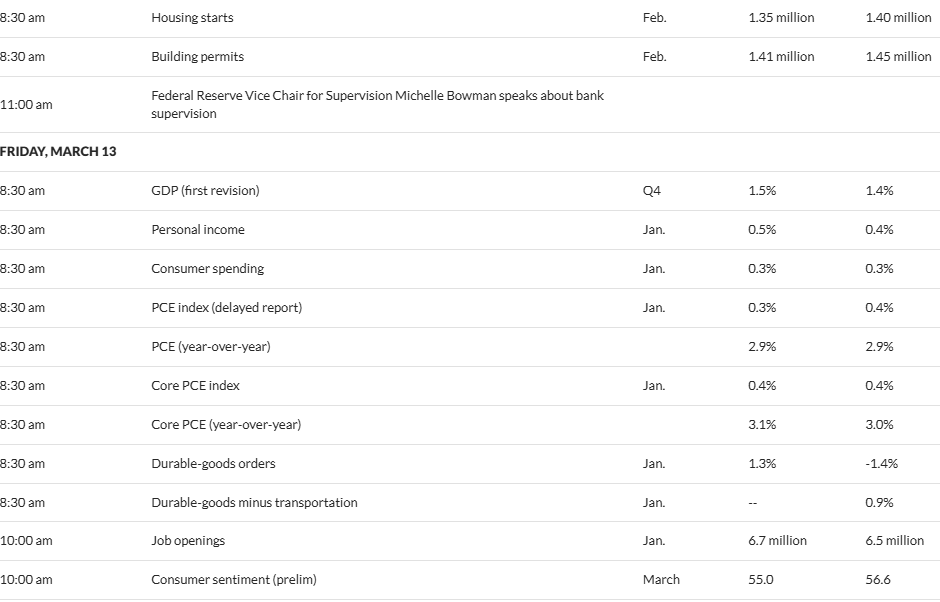
Source: MarketWatch

- Competition, Achiever, Relator, Analytical, Ideation
Josh Jenkins, CFA
Chief Investment Officer, Principal
Josh Jenkins, Chief Investment Officer, began his career in 2010. With a background in investment analysis and portfolio management from his previous roles, he quickly advanced to his current leadership position. As a member of the Lutz Financial Board and Chair of the Investment Committee, he guides Lutz Financial’s investment strategy and helps to manage day-to-day operations.
Leading the investment team, Josh directs research initiatives, while overseeing asset allocation, fund selection, portfolio management, and trading. He authors the weekly Financial Market Update, providing clients with timely insights on market conditions and economic trends. Josh values the analytical nature of his work and the opportunity to collaborate with talented colleagues while continuously expanding his knowledge of the financial markets.
At Lutz, Josh exemplifies the firm’s commitment to maintaining discipline and helping clients navigate market uncertainties with confidence. While staying true to the systematic investment process, he works to keep clients' long-term financial goals at the center of his decision-making.
Josh lives in Omaha, NE. Outside the office, he likes to stay active, travel, and play golf.
Recent News & Insights

QuickBooks
QuickBooks Online: Time, Billing, & Sales Forms
For many business owners, the work doesn’t end when the job is complete. Employee hours need ...
Market Commentary
The Market Is Harder to Outsmart Than It Looks
If you are looking for a reason to make a change to your portfolio, today’s market provides ...

Nonprofit
Tailoring QuickBooks Online to Fit Your Nonprofit’s Needs
For nonprofit organizations, every dollar matters. At the same time, accurate financial ...

Family Office
The Great Wealth Transfer: Retaining the Next Generation
Most families with substantial wealth already have the documents. They likely have a will, ...


Let’s get you where you want to go.
We work to simplify complexities, help make critical business decisions, and confidently focus on the things that are truly important to you. We embrace your business as our own to spark the right solutions and help you thrive.