
.png?width=1440&height=622&name=Accounting%20Service%20Menu%20Image%20(1).png)
.png?width=1440&height=622&name=Tech%20Service%20Menu%20Image%20(1).png)
.png?width=1440&height=622&name=Financial%20Serivce%20Menu%20Image%20(1).png)
.png?width=1440&height=622&name=M%26A%20Service%20Menu%20Image%20(1).png)
.png?width=1440&height=622&name=Talent%20Service%20Menu%20Image%20(1).png)
%20(1).jpg?width=264&height=160&name=Website%20Featured%20Content%20Images%20(2)%20(1).jpg)
%20(1).jpg?width=264&height=160&name=Website%20Featured%20Content%20Images%20(4)%20(1).jpg)
-Mar-08-2024-08-50-35-9527-PM.png?width=300&height=175&name=Untitled%20design%20(1)-Mar-08-2024-08-50-35-9527-PM.png)

%20(1)-1.jpg?width=264&height=160&name=Website%20Featured%20Content%20Images%20(2)%20(1)-1.jpg)
-1.jpg?width=264&height=160&name=Website%20Featured%20Content%20Images%20(1)-1.jpg)
%20(1).jpg?width=264&height=160&name=Website%20Featured%20Content%20Images%20(3)%20(1).jpg)


.jpg)

.jpg)
Traditional estate planning typically focuses on how and to whom your assets will pass at your death, with a particular emphasis on accomplishing your goals in the most tax-efficient manner possible. A growing number of advisors are encouraging their clients to take this process a step further. Instead of just placing the focus on how to transfer your financial assets to your kids (and grandkids), why not also make efforts to pass along your personal values to them as well?
Many children are not equipped to handle the wealth they inherit and have little understanding of the values that were important to their parents while accumulating that wealth. As parents, we dedicate a lot of time and effort teaching our kids to be kind, honest, respectful, and hard-working, but usually much less time teaching them about money or our beliefs about it.
The most valuable resource I have come across to help address this gap comes from the book A Spectrum of Legacies, written by my friend and mentor Mark Weber. We have given Mark’s book out to a number of our clients who have found it to be of immense value as they seek to take their planning to the next level.
My Introduction to Legacy Planning
A few years ago, I participated in the Chartered Advisor in Philanthropy (CAP) program, a year-long graduate-level course offered through the American College of Financial Services that equips professional advisors with the tools to help clients reach their charitable giving objectives as an integrated piece of their estate and financial plans.
Several years earlier, Mark Weber had founded a CAP study group in Omaha, where each year he led a group of attorneys, CPAs, financial advisors, and non-profit leaders to come together to share their collective wisdom and experiences to further the goal of fostering more meaningful planning conversations with clients. The Omaha CAP study group now has an alumni list of over 150 advisors who have gone through the CAP program, and this local group now serves as a model that numerous cities across the country have since emulated.
A Spectrum of Legacies:
A Broader View of Estate Planning
It was at this CAP study group that I came to better understand Mark’s more nuanced approach to estate planning, which he laid out in A Spectrum of Legacies. The book spurs creative thought and meaningful conversations as the reader explores several core questions:
1. How to Know When You Have Enough
Before you can feel comfortable having bigger conversations about how much to leave to your heirs or charity, you need to first have confidence that your assets are sufficient to provide for you and your spouse for the remainder of your lives. Gaining this level of confidence is something I personally spend a lot of my professional time helping my clients to achieve. In working with a lot of high-net-worth families, I know that many of them worry greatly about running out of money before they die. Regardless of the number of zeros in their balance sheets, it is not uncommon for the affluent to have a sense of paralysis in their long-term planning out of fear of not having enough.
Thankfully, by working with an advisor, you can come to relieve this type of fear. I help clients understand their budget, anticipated income, and expenses, and then model out the trajectory of their balance sheet over time. I further help them stress test different scenarios (e.g., market declines, long-term care expenses, living longer, needing to support other family members, etc.) so that they come to understand that they do, in fact, have enough, often with an ample cushion to give them the peace of mind needed to really dig into a legacy plan for their family.
2. How much should you leave to your children?
Once someone gets comfortable that they personally have enough to live on, trying to decide how much of their financial cushion they should pass on to their heirs is the next big issue to tackle. Traditional estate planning often assumes the client wishes to leave all that excess to their kids. Legacy planning encourages people to really explore that issue in a more intentional manner.
In cases where the family has a large cushion, parents posed directly with this question can struggle in determining how much is too much when it comes to what their kids (and grandkids) should receive. While there is no one-size-fits-all answer to this complex question, A Spectrum of Legacies offers thoughtful questions and real-world examples that illustrate how different families have navigated this decision based on their values, goals, and family dynamics.
3. How to Prepare Children for an Inheritance
It has been observed that many attempts to transfer wealth to the next generation end up failing, whether due to foolish expenditures by the heirs, financial incompetence, litigation, taxes, bad investments, or family feuding. Most of this boils down to a breakdown of trust and communication among the family and/or a lack of adequate preparation of the heirs to receive their inheritance. The book provides several suggestions to combat this problem, including:
- Having conversations with your kids about money and your values
- Utilizing your professional advisors to help educate the next generation on appropriate topics
- Writing a letter to your kids to include with your estate documents that they will read upon your passing
- Conducting structured family meetings
- Practical examples are included to illustrate how these meetings can be structured, who should attend, what topics to cover, and how they can support a smoother transition of wealth
4. How Personal Values Shape Your Legacy Plan
In many surveys of high-net-worth individuals, the single most important thing they would like to pass on to their children is not money, but their personal values. Giving thought to what values matter most and how you would like to pass them on to the next generation can become a driving force of your legacy plan. Mark’s book provides suggestions and examples on how to go about doing this throughout the planning process.
5. Creating Your Legacy
After addressing your needs and how much to leave the kids, focus can be shifted to what type of legacy you want to leave when you’re gone. How do you want to be remembered? In this context, raising responsible heirs and making an impact on your community are often the primary considerations. When it comes down to it, your wealth can be:
- Spent
- Gifted to heirs
- Gifted to charity
- Given to the government via taxes
One of the biggest benefits of legacy planning is that it leads people to become much more intentional about their charitable planning than they otherwise would have been. Once my clients feel confident that they have enough money for their lifetime and their heirs will be financially secure, they often get more creative and thoughtful about impacting their community through their charitable endeavors. This can lead to broader discussions about what organizations to support during life and at death, and the vehicles and approaches to do so in the most efficient manner. This can generate a more thorough discussion of these goals by the entire family, and if desired, can serve as a way to include the next generations in these charitable decisions.
Build a Confident Legacy Plan with Lutz Financial
If legacy planning feels like a missing piece in your current strategy, our team at Lutz Financial is here to help you. Our services include a value-driven approach that is rooted in connecting money with meaning, helping families understand what they need, what their heirs will need, and how their resources can support long-term goals.
As part of that process, I often recommend A Spectrum of Legacies as a resource. It offers case studies, examples, sample letters, and meeting agendas from other high-net-worth families exploring similar questions.
With several CAP-designated professionals on our team, including four financial advisors and multiple CPAs, we’re equipped to help you build a legacy plan that reflects your intentions and endures for generations. Contact us to learn more.
Important Disclosure Information

- Achiever, Learner, Competition, Arranger, Focus
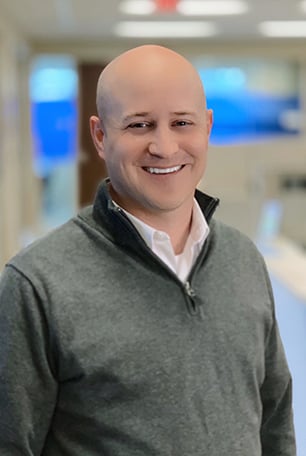
Joe Hefflinger, JD, CFP®, CAP®
Joe Hefflinger, Investment Advisor & Principal, began his career in 2005. With a background in corporate law, mergers and acquisitions, and tax planning, he brings a unique perspective to financial advising, reinforcing his ability to guide clients through complex financial decisions.
Specializing in investment advisory services and financial planning, Joe works closely with high-net-worth families and business owners in transition. He focuses on estate planning, insurance planning, and charitable giving, helping clients structure their wealth to achieve their long-term objectives. His background in law allows him to navigate the intricate details of succession planning, ensuring clients have a clear path for both their business and personal financial future.
At Lutz, Joe serves beyond expectations by providing proactive, personalized financial guidance. He takes the time to understand each client’s unique needs, delivering tailored strategies that build confidence and security. His focused approach has helped make Lutz Financial a trusted resource for individuals and business owners alike.
Joe lives in Omaha, NE, with his wife, Kim, and their daughters, Lily and Jolie. Outside of the office he can be found in basketball gyms across the Midwest, cheering on his daughters’ teams.
Recent News & Insights

Nebraska Tax Incentives for Ag Businesses

Steps to Build a Strong IT Security Culture

QuickBooks Online: Time, Billing, & Sales Forms

The Market Is Harder to Outsmart Than It Looks