

%20(1).jpg?width=300&height=175&name=Mega%20Menu%20Image%20(2)%20(1).jpg)
%20(1)-Mar-08-2024-09-27-14-7268-PM.jpg?width=300&height=175&name=Untitled%20design%20(6)%20(1)-Mar-08-2024-09-27-14-7268-PM.jpg)

%20(1)-Mar-08-2024-09-11-30-0067-PM.jpg?width=300&height=175&name=Untitled%20design%20(3)%20(1)-Mar-08-2024-09-11-30-0067-PM.jpg)
%20(1).jpg?width=300&height=175&name=Mega%20Menu%20Image%20(3)%20(1).jpg)
%20(1).jpg?width=300&height=175&name=Mega%20Menu%20Image%20(4)%20(1).jpg)
%20(1).jpg?width=300&height=175&name=Mega%20Menu%20Image%20(5)%20(1).jpg)
-Mar-08-2024-08-50-35-9527-PM.png?width=300&height=175&name=Untitled%20design%20(1)-Mar-08-2024-08-50-35-9527-PM.png)


.jpg)


%20(1)-Dec-02-2025-09-05-11-2067-PM.jpg)
Taxes may not be the first thing you think about when you invest, but they play a bigger role in long-term results than many people realize. At the end of the day, an investor can only spend what is left after Uncle Sam has taken his cut.
The gap between what you earn and what you keep can be surprisingly wide. Two investors can own very similar portfolios and end up with very different after-tax returns, simply because one paid more taxes along the way. The good news? Modern investors have an array of tools at their disposal to maximize tax efficiency.
Here are three practical strategies that can help keep more of your money working for you.
1. Choose Tax-Efficient Investment Vehicles
Mutual funds and ETFs are required to distribute capital gains that occur inside the fund, even if you didn’t sell anything yourself. That can create frustration, unpredictability, and unnecessary taxes.
While both vehicles follow the same rules, they don’t operate the same way. ETFs use an “in-kind” creation and redemption mechanism that allows them to remove appreciated positions from the portfolio without triggering a taxable event. This structural advantage helps ETFs avoid capital-gain distributions far more effectively than traditional mutual funds(1), giving investors more control over when they recognize gains.
For long-term investors seeking broad, diversified exposure at low cost, ETFs offer a simple and powerful path to better tax efficiency.
2. Keep Portfolio Turnover Low
Turnover represents the buying and selling activity happening inside a portfolio. High-turnover strategies buy and sell more frequently, which can create taxable gains in two ways: through trades you make directly and through trades happening inside the funds you hold. Both sources add to your tax bill over time. The problem is compounded if the gains end up being short-term(2), as they are taxed at higher rates.
Broad-market and factor-based funds, by contrast, usually have very low turnover baked into their design. They don’t need to trade often to maintain their exposure. That patience shows up in the tax bill. Lower turnover means fewer taxable events, fewer surprises, and more of your returns compounding over the long term. It’s one of the quiet advantages of disciplined, rules-based investing.
3. Use Tax-Loss Harvesting Where Appropriate
Markets move in cycles, and temporary declines can create opportunities. Tax-loss harvesting involves selling an investment at a loss to offset realized gains elsewhere. The goal isn’t market timing, it’s disciplined tax management.
Effective harvesting programs follow a consistent, rules-driven process. The key is to capture the loss while staying fully invested, typically by reinvesting the proceeds into a similar (but not “substantially identical”) fund. This maintains your market exposure while securing a tax benefit. Harvested losses can help reduce your tax bill, smooth rebalancing, and support stronger after-tax results.
Final Thoughts
Tax efficiency doesn’t require complex strategies or exotic products. Small, thoughtful choices can make a meaningful difference. Using ETFs, minimizing turnover, and a disciplined loss harvesting program can quietly add real value over time. More importantly, they support what matters most: keeping your plan on track and letting compounding do the heavy lifting.
1. More recently, at least one fund provider has figured out how to incorporate the ‘in-kind’ creation and redemption process into the mutual fund wrapper. Funds managed by Dimensional Fund Advisors now carry this capability. This marks a substantial improvement in tax efficiency for the vehicle.
2. Short-term gains arise when an appreciated security is sold prior to being owned for a full year.
Week in Review
- The latest ISM (Institute for Supply Management) Manufacturing PMI, a key indicator of economic activity in the manufacturing sector, fell to 48.2 in January. This marked the ninth straight month that the Manufacturing PMI stayed below 50, signaling contraction in manufacturing activity.
- According to FactSet, 95% of the S&P 500 reported Q3 results as of November 21st. The earnings growth rate for the quarter ended at 13.4% year-over-year, which would mark the fourth straight quarter of double-digit earnings growth for the index. FactSet also provides insight into the revenue growth for the S&P 500 this quarter, which is currently at 8.4%. If 8.4% is the actual growth rate of revenue for the quarter, it would mark the highest revenue growth rate reported by the index since Q3 of 2022.
- The Producer Price Index (PPI), which tracks changes in prices that producers pay to their suppliers, rose 0.3% in September and 2.7% year-over-year. Core PPI, which excludes food and energy, edged up 0.1% for the month and 2.9% annually. These September figures, delayed by the recent government shutdown, indicate a modest increase in wholesale prices prior to the shutdown. Importantly, this report will be the final inflation data available to the Federal Reserve before its December policy meeting.
Hot Reads
Markets
- U.S. Manufacturing Contracts for Ninth Straight Month (WSJ)
- Where Do Fed Voters Stand On a December Rate Cut (WSJ)
- Fed Chair Powell’s Allies Provide Opening for December Rate Cut (WSJ)
Investing
- How Much Will the Stock Market Fall in 2026? (WSJ)
- The Untold Story of Charlie Munger’s Final Years (WSJ)
- Are Stocks a Better Bet Than Social Security (Jason Zweig)
Other
- Inside Cadillac’s $1 Billion F1 Gamble (YouTube)
- How AI is Killing The Value of a College Degree – CNBC (YouTube)
- In Fukushima’s Shadow: Japan’s Pivot Back to Nuclear (YouTube)
Markets at a Glance
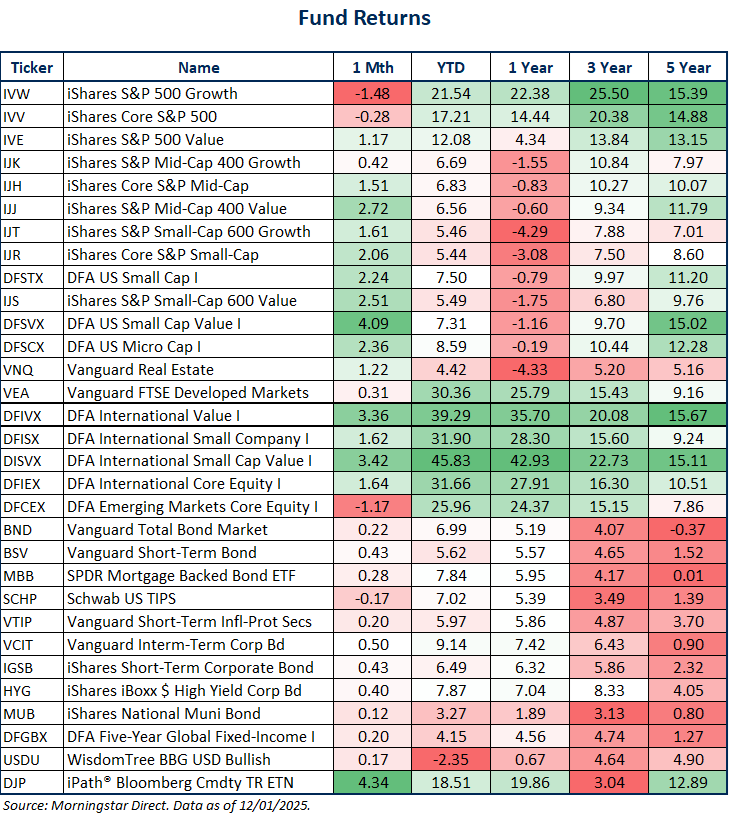
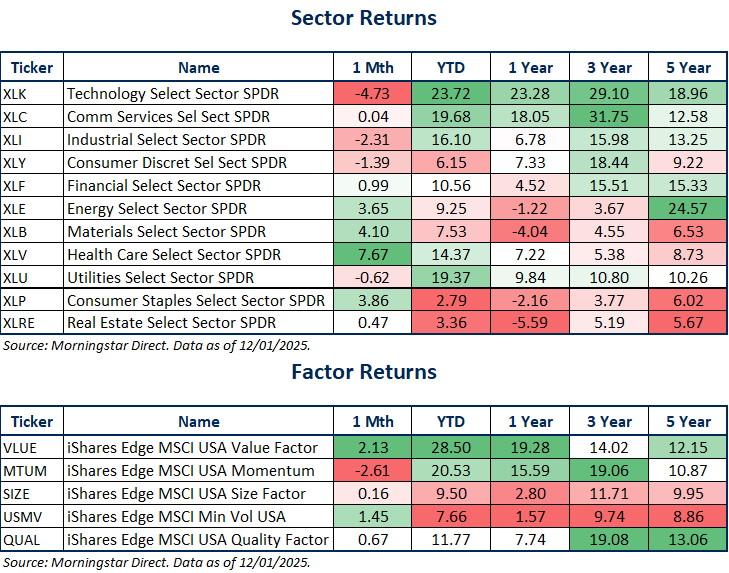
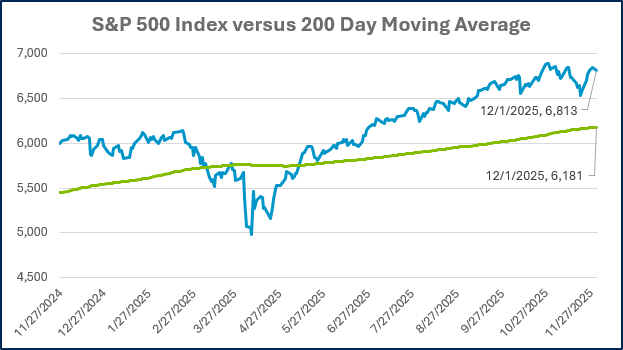
Source: Morningstar Direct.
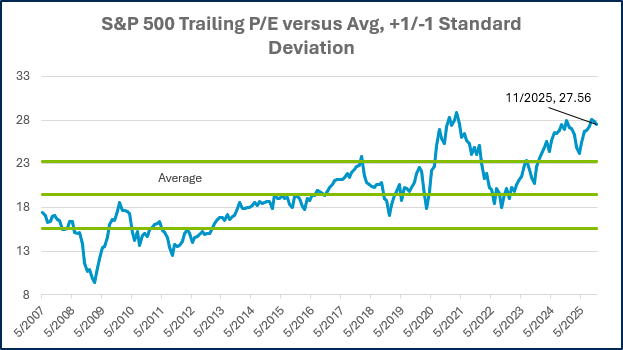
Source: Morningstar Direct.
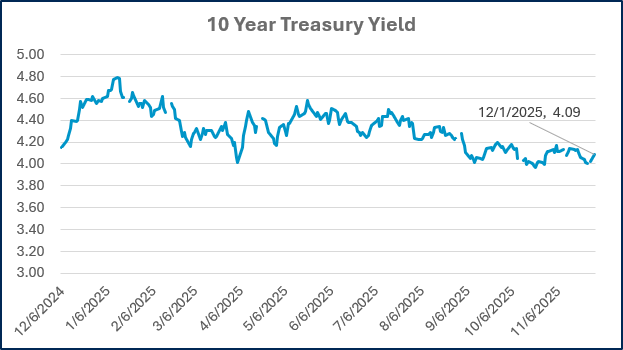
Source: Treasury.gov
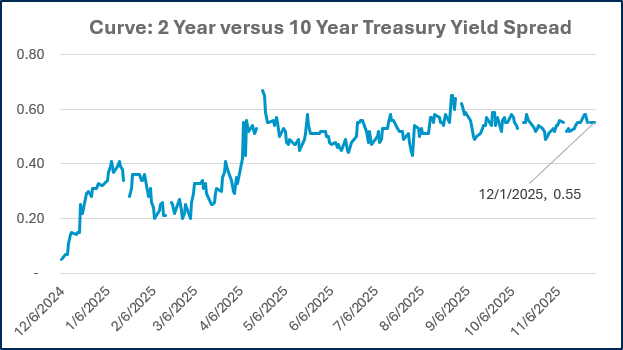
Source: Treasury.gov
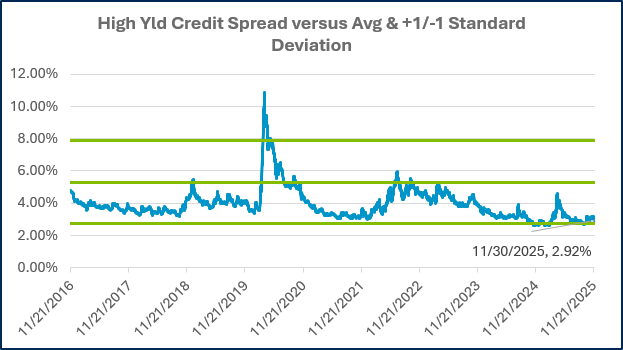
Source: FRED Database & ICE Benchmark Administration Limited (IBA)
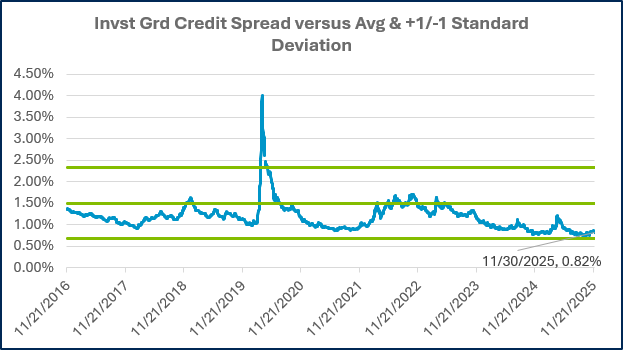
Source: FRED Database & ICE Benchmark Administration Limited (IBA)
Economic Calendar
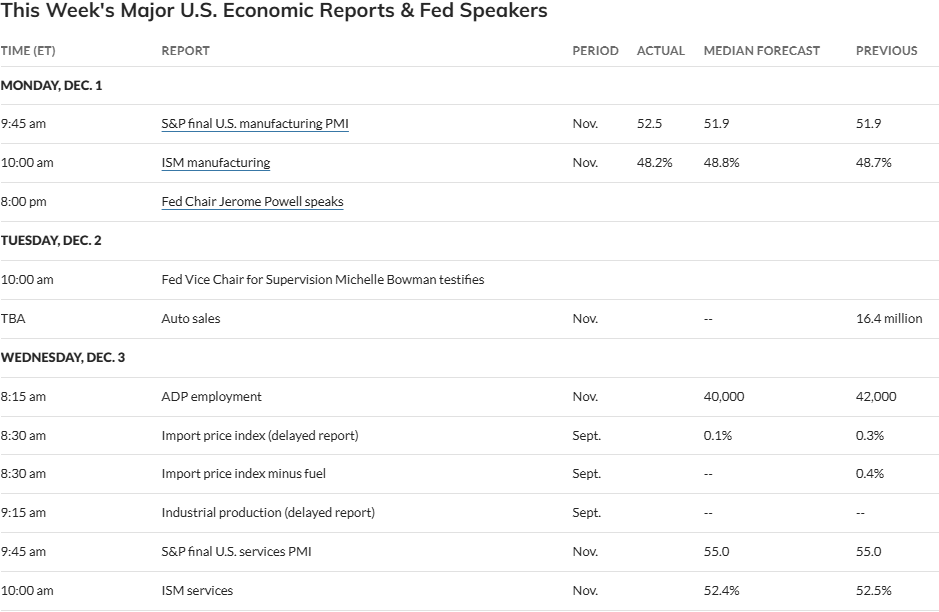
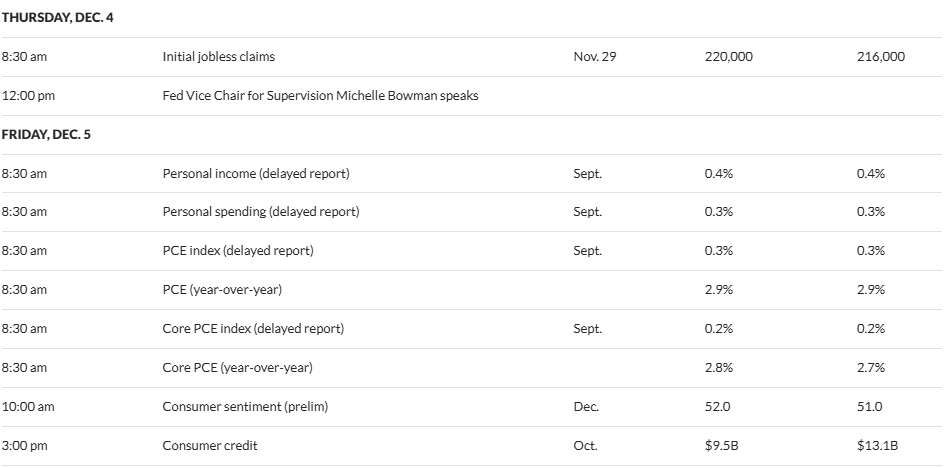
Source: MarketWatch

- Competition, Achiever, Relator, Analytical, Ideation
Josh Jenkins, CFA
Chief Investment Officer, Principal
Josh Jenkins, Chief Investment Officer, began his career in 2010. With a background in investment analysis and portfolio management from his previous roles, he quickly advanced to his current leadership position. As a member of the Lutz Financial Board and Chair of the Investment Committee, he guides Lutz Financial’s investment strategy and helps to manage day-to-day operations.
Leading the investment team, Josh directs research initiatives, while overseeing asset allocation, fund selection, portfolio management, and trading. He authors the weekly Financial Market Update, providing clients with timely insights on market conditions and economic trends. Josh values the analytical nature of his work and the opportunity to collaborate with talented colleagues while continuously expanding his knowledge of the financial markets.
At Lutz, Josh exemplifies the firm’s commitment to maintaining discipline and helping clients navigate market uncertainties with confidence. While staying true to the systematic investment process, he works to keep clients' long-term financial goals at the center of his decision-making.
Josh lives in Omaha, NE. Outside the office, he likes to stay active, travel, and play golf.
Recent News & Insights

Tech
Microsoft 365 Series: Copilot Explained – Your New AI Assistant
Artificial intelligence isn’t on its way to the workplace; it’s already here. For ...

Human Resources
What's the difference between Outsourced HR and a PEO?
As organizations grow, HR responsibilities tend to grow with them, sometimes faster than ...

Market Commentary
Why Small Companies Still Deserve a Seat at the Table
For much of the past decade, large U.S. companies have dominated headlines and portfolios ...

Ag
Implementing Power BI Analytics for Modern Agricultural Operations
Agricultural operations generate more data than ever from crop inputs, equipment usage, and ...


Let’s get you where you want to go.
We work to simplify complexities, help make critical business decisions, and confidently focus on the things that are truly important to you. We embrace your business as our own to spark the right solutions and help you thrive.